Adam Parks (00:00)
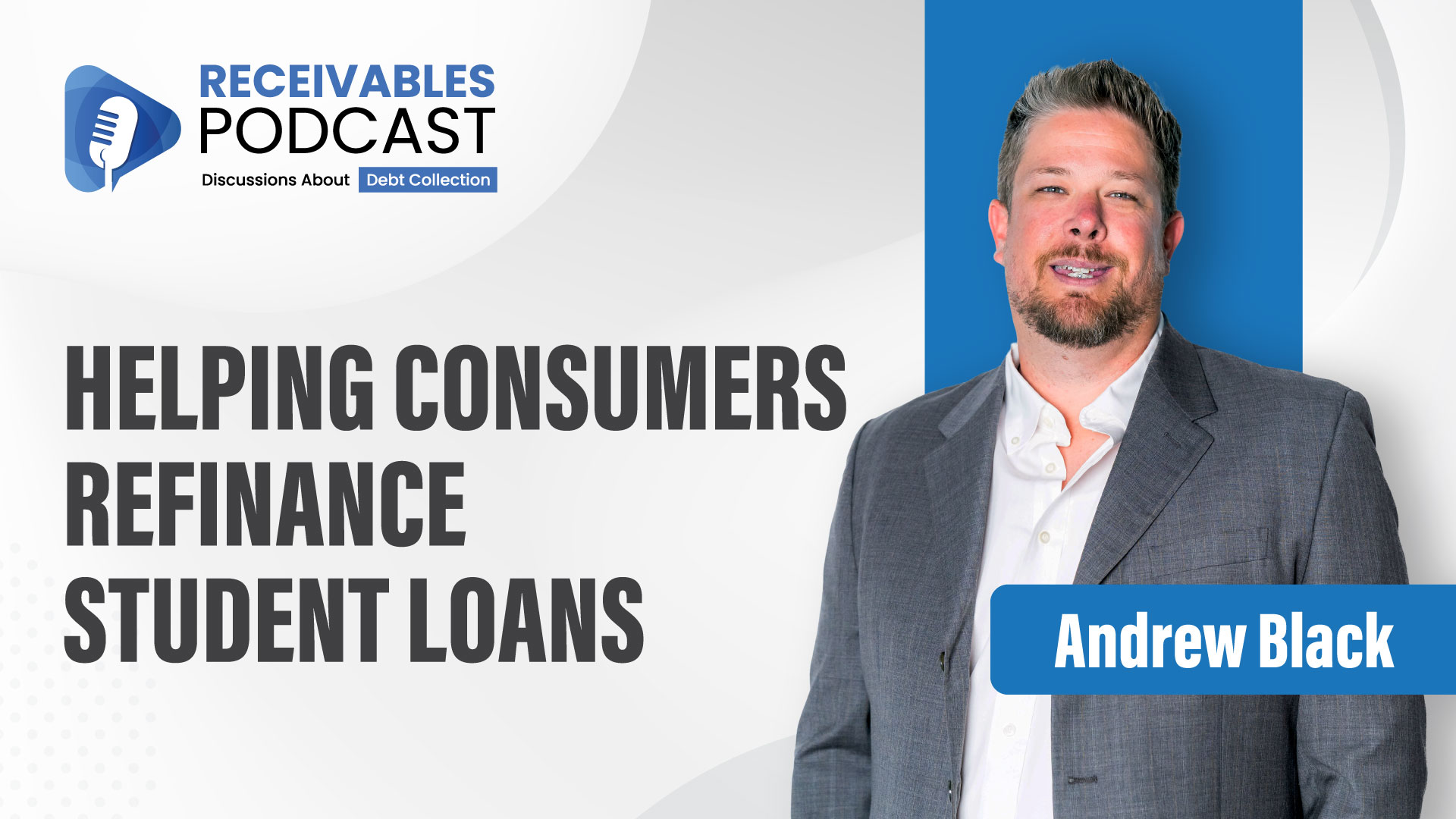
Hello everybody, Adam Parks here with another episode of Receivables Podcast. Today I’m here with my good friend, Mr. Andy Black, joining us from Yrefy. And I asked Andy to join me today because, well, him and Dan Parks are frequenters, I think is a good way to say it, of the conferences around the debt collection industry. Although they’re not debt collectors, right? Like they’re refinancing lenders.
And it’s such an interesting approach to solving the consumer issues and knowing what we see in the headlines around student loans in general, I feel like this is a timely topic for organizations to in the debt collection space to really understand some of the tools that could be in their toolbox as they’re trying to help consumers resolve outstanding accounts. So Andy, thank you so much for joining me today. I really do appreciate your insights. Every time that we have a chat, I learn a little something.
Andy Black (01:05)
Happy to be here. I think in general we’re looking at significant changes in student loans, but with those federal changes, those create their own problems in the debt space or in private collections. And yeah, as a lender visiting or going to these shows, there are a lot of people saying, Hey, can I get that business? But we also have another way to create partnerships with collection agencies.
And not to mention it’s just kind of our world. Dan and I both come from extensive collections backgrounds, right? Dan, I think, has been in collections for about 64 years or something like that. And 20-25 years in like receivables. So my history began in managing or working on the phones in a federal PCA or private collection you see for the education department. And over time, I worked for a couple of those.
Then in leadership, we established a subcontracting role where we had, I think, five different subcontractors we worked with all on the federal product. So student loans and being in student loans and in receivables and how those partner together has been really my life and a good hunk of dance.
Adam Parks (02:34)
Fair enough. Coming from the student loan sector and all the changes in student loans, and we’ve talked about that in some other podcasts and webinars through the years. And it’s I mean, there’s no shortage of volatility. And I think everything at this point is driven based on rumor because it was, I mean, we’ve heard it directly from the Department of Education. If you’re not sitting on the inside, you don’t really know what they’re gonna do next. And I’m not sure that they really know sitting on the inside itself either.
Andy Black (03:05)
Yeah, we ‘ve been at conferences where we have the deputy director sitting there and telling us this is their plan and that shoot, they were supposed to be fully fledged operational in collections by I think he said January of the six months ago. So things are changing daily and I think everybody’s trying to get a handle on that.
And that’s just in the collection space, not to mention what’s happening in the actual federal space and we just had another injunction come through like two days ago suspending a pretty big process for what was supposed to happen in repayment starting tomorrow.
Adam Parks (03:49)
Well, like I said, there’s no shortage in what is changing from a federal perspective, but where you guys have been, I mean, you’ve been my student loan source. Like you’re, that’s the academic source for me, right? I call you and Dan, I say, hey, all right, hey, I saw this. What does it actually mean in reality? Because not only your interpretations of it, but the relationships throughout have really been impactful for me to better understand some of the data that’s been at my fingertips.
But now I want to go back to my original premise of, you know, you guys are coming to all of these shows. There’s rarely an event I attend that I don’t have an opportunity to spend some time with you. What’s that, what’s that value add that you’re bringing to those partnerships from an agency or a law firm or a debt buyer perspective? And how does that impact the consumer themselves, the underlying consumer in the portfolio.
Andy Black (04:50)
So we’ll do it in two parts here, really, because Yrefy works in a position where we try to bring three groups together and try to accomplish a win for all parties involved. The reason we go to these collection events or conferences is our primary target is a defaulted private student loan. And we recognize that collection agencies have all the defaulted private student loans. And coming from the phones, we always looked for a new tool or a new opportunity or a way to find help for a customer through our assessment and conversation. So what we bring to and what we’re looking for at our shows is trying to meet either to find new partners or to engage in our current partnerships with different collection agencies where we
Work in a referral partnership. These agencies are talking to consumers who likely can’t pay the bill, likely can’t do a CIF, or really likely can’t do a meaningful PPA. After the agency is going through and speaking to the customer and they’ve taken an FNC and they they see there really is no opportunity for an arrangement or a solution that moves the needle for them or the customer, they have an option and we work with probably around a hundred different agencies to refer business to Yrefy.
They effectively talk to the customer. Hey, I can’t do any of those things. I’d like to maybe try a monthly payment. And they can say, Hey, I know of a company that refinances the loans. Would you like to speak with them? Most of those arrangements are done in like a warm transfer where they can transfer that customer to us. We do custom landing pages, we do marketing, we do several things to help facilitate.
The collection agency got that business from Yrefy. And ultimately what we’re gonna do is we’re gonna provide a settlement for the debt for the customer. So albeit through your FNC, you realize the customer didn’t have any money. And you can send them to Yrefy. One thing we’ve learned coming from not reading the Mini Miranda at the beginning of a conversation is that Yrefy kind of comes into these scenarios.
As Dan likes to say, wearing a white hat riding a white horse, right? We’re approaching it from just a different angle to the consumer. And believe it or not, sometimes customers have been known to not tell the complete truth to a collection you say. Maybe that can happen. So we recognize that when they’re presented with somebody who genuinely wants to get to know them and understand their circumstances.
That they open up a little bit and they’re willing to really explain what their goals are, and we explain to them how we help. At the end of the call, it’s about finding a solution for the customer. So one other thing that separates Yrefy from a traditional refinance lender, you know, you go to any of the major refinance companies that are out there, and you really only have autonomous ways to get along.
You’re doing it through an online application. They’re reviewing your FICO income degree type, whether you’re approved or not.
Our goal in our conversations with customers is to have genuine conversation and understand the customer. We’re not writing, we have no minimum FICO score. So we’re open to helping customers from all backgrounds. When we pay off this debt or we’re making that settlement to the collection agency, this is where the agency gets the win. Right. They’re accepting a settlement from Yrefy that was within their contract and what they normally accept from a customer.
Except we’re providing the funds that they don’t have access to on their own. So we step in to give them access to those funds and we make that payment on their behalf. So now the agency is winning. They can help in their races. They can help move their curves. And that’s agencies, that’s debt buyers, that’s everybody. And then the customer walks away with a new loan, fixed interest rate, fixed payment.
Typically something that is more affordable. So we really again through our communication, try to figure out what the affordability looks like for the consumer and provide them a monthly payment. So Yrefy wins, we get a customer that’s engaged and needs help. Customers win because they get a new loan that’s helping to positively build their credit as we report their good monthly payments. And the agency wins because they took somebody who didn’t have access to significant funds and found a way to get a lump sum.
Adam Parks (09:58)
They’re able to actually resolve it. And it’s not that although the refinancing portion is limited to the student loan arena specifically, the solution itself from an agency or a collections perspective is not necessarily limited to what I’m collecting on a student loan. A consumer that’s delinquent is most likely delinquent across multiple products. So if I’m collecting on a credit card and I see that this student loan is also in default and I’ve got that arrangement, wouldn’t it work kind of the same way to free up that cash flow to try and pay down that credit card?
Andy Black (10:33)
Certainly. And we’ve worked with some creative buyers and people in the space who’ve been able to identify some of those opportunities and are quite happy with. They understand that this is a cash flow situation for the customer. And it in turn being able to provide them the relief in their student loans can create that additional cash to take care of their other obligations. Our
You know, we’re providing my average interest rates in the low four percent fixed. We’re extending terms when needed for these customers to really give them some affordability where now they have funds to get right in the world. Speedy, I mean, even on those credit cards, I talk to customers sometimes who are like, Yeah, I put thirty dollars on my credit card so I can charge twenty dollars worth of gas. Well, they’re that that hand of mouth is just not sustainable. And one thing we believe in and due to the amount of people we’ve talked to and genuinely trying to know is I think most people want to do the right thing in most scenarios. It’s about ability a lot of times. It’s about them seeing the option and we focus on providing them a solution that is actually attainable. And that’s how we are helping today.
Adam Parks (11:48)
That solution set though from the agency’s perspective, I definitely see that opportunity to try and move that cash flow into a new location from the consumer’s perspective. They didn’t have another option.
versus less on a monthly basis in order to get themselves out, right? ‘Cause you start stacking on the fees and all of the things that have accumulated during the time and of their delinquency. But what does that look like in reality based on the programs that you’re putting to the
Andy Black (12:42)
So, for a customer, we’re not a solution for everybody, and I don’t want to be a solution for everybody, right? I’m here for people who need the help, people who don’t have access to the settlement, don’t have access to the balance, and can’t do something meaningful to pay the loan off quickly. We focus on helping people who have the ability to make a monthly payment and and just as importantly is the desire. We wanna talk to people who are interested in repaying.
And this is how those relationships work together because sometimes an agency is dealing with the customer who wants to do something, but their requirement to their contract or their requirement to help their recovery just doesn’t align. And that’s where Yrefy can help with paying off the debt in that single payment.
You know, you look at other options. I’m not entirely, we’re not licensed as a debt settlement company. We are a refinance company, we’re a licensed student loan lender. There are some similarities to a debt settlement space. And when we did the math and we looked at some debt settlement products, most of those are quoting: they’re gonna pay 50%, they’re gonna charge a settlement fee.
And then if they take advantage of those, like some of these debt settlement companies offer financing for the debt settlement, by the time you add all those fees together and you’re paying your 2399 or 25% interest on those settlement loans, the customer actually ends up paying more money than they do in working with Yrefy by going through and us doing a settlement on their behalf, them refinancing the balance or doing the settlement on our behalf and then refinancing the balance.
The repayment is almost always less than what that settlement looks like for them if they don’t have access to come up with those funds. Even taking advances or going to some of those online lenders, I mean some of those advertised rates are 36% interest. You take a 50% with a 30% 6% interest on a five, six year term, you’re paying back more money than what our low interest, Monthly installments are for these customers.
Adam Parks (15:18)
Yeah, it makes sense. What’s the biggest misconception that the deck collection industry has of this type of arrangement? Like as you’ve sat down with all of these hundreds of organizations over time, like what’s the biggest misconception that they have about this type of arrangement?
Andy Black (15:36)
The thing is that Dan and I not only go to the conferences, but when we have a partner that we’re working with, we go and we’ll sit with, we’ll go to their site, sit with their agents and talk to the actual guy who’s doing the work. Now, we’re in a good spot there because we’ve both sat at that desk and know what it’s like to do that work.
And the thing that I found unique is and this isn’t just with the collectors, but it’s also with some of the owners of debt, whether debt buyers, lenders, things like that, is there’s this assumption that when Yrefy settles the debt, that somehow we’re locking in a hundred percent or a hundred and ten percent with interest of what the loan value is. When the reality is all we’re doing at this point is taking a risk, right? We’re fronting money to somebody, particularly if they’re already with the agency, somebody who’s a known debtor.
And we are going to give a large payout of Yrefy cash on their behalf and then hope that we’ve done a good enough job in vetting our customer and coming up with our underwriting parameters to ensure long-term success of that customer. But the reality is all we’ve done at that point is accept a risk and work on our behalf to make sure we’re recovering those funds. So it’s albeit we’re paying a settlement and the customer has a loan for the balance, that’s not guaranteed funds. And I’ve talked to some agencies and they’re like, yeah, what you’re making another, you make 60 cents on this or 70 cents. And it’s no, the only thing we’re making is debt and making a calculated risk. So that’s still the consumer we’re dealing with.
Adam Parks (17:18)
Yeah, I like it. Yeah. But it’s similar to being a debt buyer, right? Because you’re purchasing a not yet charged off but a delinquent or distressed receivable, which has a reduced value, versus if you were buying a performing note that sells at a premium.
Andy Black (17:40)
For sure. And spending some more time in those spaces, right? And performing debt sales, things like that, like we can definitely see the difference. And it’s not entirely different from what they’re doing. You’re taking a risk on this bulk, and we’re doing something similar. The beauty of what we’re doing though is albeit there is the opportunity to do well as Yrefy, the customers
Definitely winning because we pass that savings along to the customer in the form of a reduced interest rate. So even if you look at prime credit on student loan refinances right now.
you can be an 850 and you’re gonna be paying eight percent. And we’re on average being in that low four percent, they’re getting a better rate than what their prime neighbor might be getting. So ensuring that they’re receiving a genuine benefit from doing this, a lot of the loans we’re refinancing are in this 16 to 18% range, many of them variable. And
Andy Black (18:53)
Finding a way to stabilize their monthly payment, and agree to terms that are accomplishable for them, really gives them that fresh start that they need.
Adam Parks (19:06)
Well that I mean those adjustable rate loans I mean they sound like a great idea in, you know, two thousand and fifteen. But you know, things change and so do the challenges with it. And the predictability I think is important. But as you know, there’s three things that matter in any business: the cash flow, the timing of the cash flow, the risk associated with that cash flow, and I think the same thing remains true for the consumers themselves. Just being able to free up that cash flow is something like you said, you can actually move the needle in moving them towards their financial freedom again.
Like they have to get this shot and be able to rebuild positive credit. So even if you were to take away all of the other benefits and just look at it in terms of the ability to build new credit, there’s value there as well. Cause how many people after a bankruptcy or other you know financial hardships have historically run to you know let’s say a capital one and they’re gonna put down a thousand to get a thousand limit and they’re gonna leverage that to start, you know, building their credit again because they need something positively reporting on their credit report. And I think this is a similar kind of situation from the consumer’s perspective where you’re able to kind of fuel and empower.
Andy Black (20:24)
For sure. And as a consumer and even as an agency trying to find that upside for a customer, if something’s in collections and reporting to somebody’s credit and they’re making a one percent payment on that loan, it’s gonna take a hundred months. So what eight point three years or eight and a half years to pay that off. The way that Yrefy is able to help is by us stepping in and paying off that loan more immediately, right? We’re gonna pay it in a single payment.
Then settle it out. And then that customer. So now they have the bad debt that is now reported as a zero balance. And they are making regular monthly installments on Yrefy. We’re helping rebuild that credit. So in our training with our student loan advocates and with customers, and as we explain things, we have to realize, and I’m going to use a harsh word, but being a debtor is expensive, right? You’re paying more for everything. You’re paying more for your
Adam Parks (21:18)
Yeah, it is. Yeah.
Andy Black (21:23)
Auto insurance, you’re paying more for the vehicle, you’re paying more for that credit card to finance the gas, and all of those things add up over time. And it’s unfortunate that many times you can’t, it’s harder to make those payments. So it’s harder to build positive credit until you’ve done that. And so we absolutely see consumers’ lives change because they’re no longer burdened with this thing that’s been on their credit for a long time.
And they’re now able to get out of the maybe living with mom and dad and moving on to being able to get their own place because not just the student loan, but the cash flow for them, the credit improvement, and the quality of life for them moving forward. This is also why a lot of co-borrowers work with Yrefy as well. So
Adam Parks (22:19)
Interesting.
Andy Black (22:22)
You’ll have co-borrowers that engage us directly or agencies that have spoken to the co-borrower and they want to do something but can’t. Why is Yrefy’s in a position to refinance the debt with either party from the original loan? We have to have one original party on the loan. So whether that be a co-borrower or the primary borrower, we’re able to take that loan, work with it internally. We can have a co-borrow if we need to, and then get rid of that obligation for all parties.
I’ve heard of some collection agencies almost leveraging it like a cobra release, which we also offer, so even if they do have a cobra, we offer a cobra release after a series of payments, and if they qualify.
Adam Parks (22:58)
Interesting. So again, more of the options for those consumers as they’re trying to claw their way out. And when you say that you know being a debtor is expensive, you are one thousand percent right. Right? Once you’ve had so Yeah, look, but even once you’ve had some sort of a payment go awry, your interest rates immediately skyrocket. You miss that credit card payment, you’re not paying eighteen percent anymore on that card, you’re paying
Andy Black (23:19)
Yeah, we were talking about some of that before we started, right?
Adam Parks (23:33)
Whatever the maximum rate they can charge in that particular state. Right. But that is what happens quickly. And now the cost of that minimum payment, the interest that’s being accrued on that, right? Like all of that starts to add up significantly, which brings me back to the cash flow, the timing of the cash flow and the risk associated with that cash flow. Because if they can’t create that cash flow, because the expenses are just too high and the expenses to exist are just too high, even beyond luxury.
There’s not always a place to additionally cut back. So being able to more proactively service your outstanding debt to be able to move that needle and at least give you light at the end of the tunnel. So after a multi year series, you’re still gonna be in a position to rebound and grow financially. Cause once you get past that, right, like there’s real opportunity there. But the building of the credit, I think, is such an important one.
And as a professional collector for the last 20-something years. I’ve helped countless friends, family, call people that I met in the wild, look at their finances and work their way out of it. Like there is light at the end of the tunnel. I love being able to help people. And I think a lot of debt collectors are here to help consumers resolve an outstanding account or outstanding accounts.
And this being another optional tool in the toolbox so that when the scenario fits, right? But even if you can help three, five, ten, a hundred consumers a year, like that’s a significant impact, not only from a financial perspective, but also from a community impact perspective to help put those people on that path again.
Andy Black (25:18)
Yeah, I always held my head high being a bill collector. You know, I felt like I was providing a service and helping people find the options that they might not have known existed, make them aware of their circumstances and partner with that customer.
I see today in some of the consumers that we deal with that maybe lenders or agencies leverage fear. And in my experience, I always found that fear was a very good short-term motivator, but not the long-term motivator. And having light at the end of the tunnel is the long-term motivator in my eyes. That’s genuine progress, right? When you make a monthly payment with a 4% interest rate, you see your balance go down. You’re actually seeing an impact on your life.
Andy Black (26:10)
Knowing that they could be debt-free, that our goal is to get them out of debt, not perpetuate this cycle of being in debt. We really try to focus on what this means long-term for a customer versus that short-term motivator of fear. And even when I was on the phone, I always realized if I wanted somebody to stick around, we had to have a clear vision on what this meant to the customer long term, beyond what they may have been worried about when they very first called in.
Adam Parks (26:42)
Beyond the next few payments and into the future, are you able to capture their attention? Are you able to remain a priority in their monthly bills?
Andy Black (26:53)
It’s easy for somebody to call up in a few months and you know, because we’re dealing with people who might have other obligations too, as you as you addressed, and they start to slip somewhere else and well, somebody calls them up and scares them. Well, were they scarier than Alaska? And now they get the deal. But when you spend the time to understand the person and we genuinely try to understand what that vision in it is and why they’re want what motive
Adam Parks (27:00)
Sure.
Andy Black (27:20)
Why they want this solution, what the solution actually means to them. When they look down at that bill or when they’re faced with these obligations of who do I have to take care of, one of them is success, and one of them is a future, and one of them is this is scary today. And we found that by working with customers and giving them good solutions and genuinely investing in them, people are interested in trying to.
Adam Parks (27:22)
Sure. What’s the motivation?
Andy Black (27:49)
With Yrefy long term.
Adam Parks (27:52)
Well, I think from a partner perspective that makes a lot of sense. From the consumer perspective, that makes a lot of sense and it feels like this is a one of those things that all the organizations in our space really should be looking at having in their toolbox so that when the situation fits, they’ve got that solution at hand to help both the consumer
Andy Black (27:52)
And we expect that
Adam Parks (28:16)
To do right by their client and you know, meeting the obligations and actually moving the needling collections too. So Andy, I really do thank you for joining me today, kind of sharing your insights on what it is that you guys are doing to actually impact the consumer and to assist the debt collection operations with kind of meeting their objectives at the same time. And hopefully making some money. Hopefully there is somewhere.
Andy Black (28:40)
Yeah, I I it’s it’s been a cool ride to come it’s been a cool ride to come from ⁓
Dealing with the customers once they’ve they’re they’re lost at sea and I felt like that’s what it was in collections and trying to fix their their problems versus giving them instead of just maybe throwing them a life raft, we’re picking them back up and putting them on a boat and we’re going towards land. We’re we’re this is a genuine result for them versus helping them tread water better.
And we are quite proud of what we do for customers and we’re proud of how we help our agency partners and affiliates that we work with and hope to continue to do more and if look forward to talking to you more about the student loan market and the developments and how everything’s happening in the next month or so to see what what turns next for everybody.
Adam Parks (29:33)
Well, you know, I’ll be chasing you down at the ACA conference. I’m sure I’ll chase you down again at the summit for additional updates. So I appreciate you being my student loan resource and helping to keep me informed because it is such an important part of our credit ecosystem and the collections environment. And I feel like it’s one of those, you know, out of sight, out of mind kind of things because it’s been on the sideline for such a long time. But when it comes back, it’s going to impact all of us. So it’s important we keep our eye.
Andy Black (30:05)
Lots of attention should be paid and I mean realistically starting tomorrow things change for a lot of people. So we look forward to seeing how this works and talking to you and any of our partners about what this means and what we’re seeing. So thank you for having me today.
Adam Parks (30:20)
Much appreciated. For those of you that are watching, if you have additional questions you’d like to ask Andy or myself, you can leave those in the comments on LinkedIn and YouTube. We’ll be responding to those. Or if you have additional topics you’d like to see us discuss, like the student loan update that I’m sure is forthcoming quickly, you can leave those in the comments below as well. But thank you everybody for watching. We appreciate your time and attention. We’ll see you all again soon. Bye.