Adam Parks (00:08)
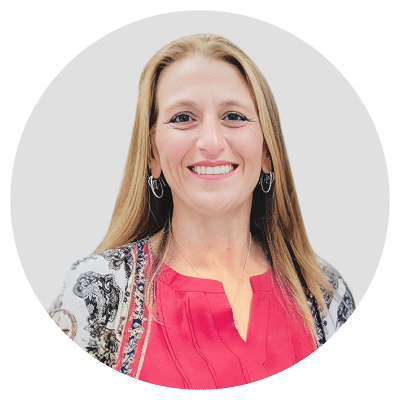
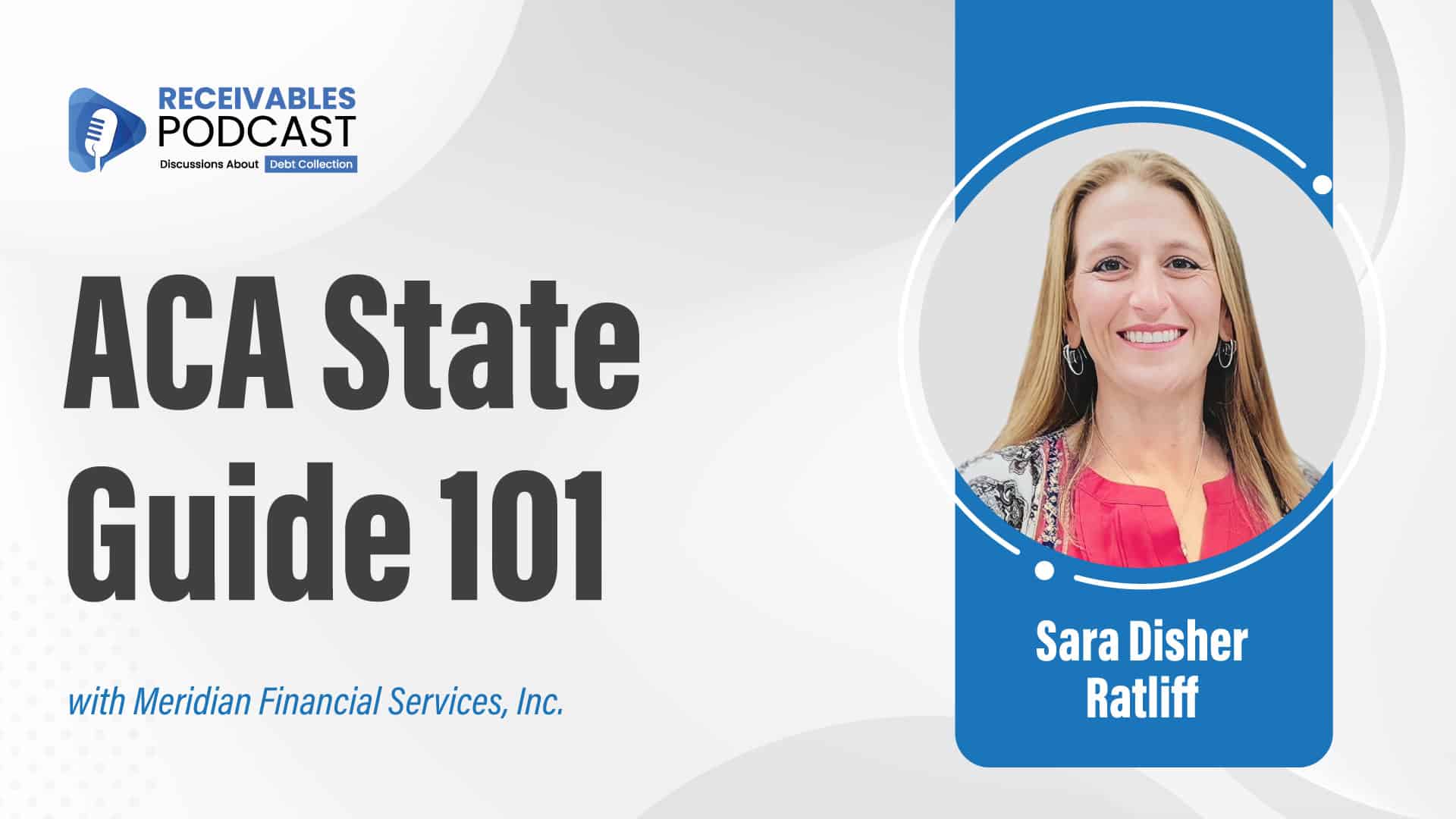
Hello everybody, Adam Parks here with another episode of Receivables Podcast. Today I’m here with a very interesting guest. I have Sara Disher Ratliff here joining me from Meridian to talk about ACA’s state guide and how she finds value in day-to-day debt collection operations and is empowering her organization with the volume and organization of compliance related information that is necessary to be a debt collector in the current day and age. So Sara, thank you so much for joining me today. I really do appreciate you coming on and sharing your insights.
Sara Disher Ratliff (00:42)
I’m ready. Thank you very much for having me, I appreciate it.
Adam Parks (00:50)
Well, absolutely. For anyone who has not been as lucky as me to get to spend a little of time with you, could you tell everyone a little about yourself and how you got to the seat that you’re in today?
Sara Disher Ratliff (01:00)
Yeah, I am a Asheville, North Carolina native born and raised, which anybody who’s been around this area recognizes is kind of like a unicorn. I have been with Meridian now going on 11 years. It’ll be 11 years in January. Prior to that, I started out my career in finance for lack of better terms, working as a call center supervisor for a bank out of New England. Through that, I learned a lot of regulations when it came down to dealing with auto loans, mortgages, checking accounts, savings accounts, all of that. From that, I ended up going into customer service for a timeshare company, which that leads into where I’m at now, which is a weird thing. But after that, I went to be a foreclosure paralegal and I became a trustee. So I ended up doing foreclosure hearings in 64 out of the 100 counties in North Carolina. which taught me a lot about how to just interact with people and clients and that kind of thing. And then through that, I was able to do litigation for real estate and learned a whole lot about a lot of different things when it came down to creditors’ rights and how to do resolution in regards to debt. And then from there, I ended up here. I had a gentleman who reached out to me on LinkedIn and oddly enough asked me if I was looking for a job and my response was, I’m always looking for a job.
And he said, well, you have a really interesting set of skills. You understand timeshare terminology, and you understand creditor terminology and collection space. And what we do specialize in is timeshare collections. So there wasn’t a lot of having to teach me the niche vocabulary that goes along with this kind of stuff. So I came in for an interview on a Wednesday, and I was given an offer that day. And 11 years later, here I am.
Adam Parks (02:47)
It does sound like a very unique niche in collections working specifically with timeshares. Now, are you doing that on a national basis or is that more localized?
Sara Disher Ratliff (02:57)
It’s actually international. We have clients in Mexico, Panama, the Dominican, the Caribbean, and then we do have hundreds and thousands across the United States. We have a relationship with a collection agency out of Canada because we’re not allowed to do anything in Canada because we don’t have a brick and mortar. But it’s amazing. Like it’s one of those things where there’s a few agencies in the industry that actually do timeshare collections. Meridian’s been around since 1988 and they were created to do timeshare collections. We do other things every once in a while. The one thing we said we’d never do is medical debt, because who in the world wants to deal with that, especially in today’s culture, although it is getting a little better. But we specialize in that because we’re really, really good at it. Our agents have a very specific way of treating consumers as owners, and they understand the terminology and what’s important to them and what would make them be more likely to pay given the element of timeshare versus say, a credit card.
Adam Parks (03:53)
Okay, well that’s pretty interesting. Can you tell me a little about your role with Meridian and what you’re doing day to day?
Sara Disher Ratliff (03:59)
Yeah, so I started out as the compliance coordinator, became a compliance manager, and then opted this year to change it over to compliance officer just because of how many things have now fallen under my purview. Initially when I first started off, I was doing e-Oscar disputes, so anything that came in through e-Oscar went through me. And then I did all of the mailed in disputes that came in and then anything that came through the Attorney General, Better Business Bureau, CFPB, anything like that. Throughout the years, because of how all of those things kind of fall into regulations and understanding of all of those things across the country, it kind of just became a natural progression for me to take over all of our licensing, bonds, I handle all of our litigation in-house before it goes to and through our E &O.
I handle all of our renewals on all of our business insurance, E &O, directors and operators, any type of liability, that kind of thing, cyber insurance. I do all of our state audits. So right now I’m in the middle of our Nevada audit, which I just got Friday. And then I also do some of our corporate taxes and reviewing of all of that. I’m on the board of directors for Meridian.
Adam Parks (05:04)
That sounds like fun.
Sara Disher Ratliff (05:14)
So I go through and do all of the review of the minutes for that. the corporate secretary. So yeah, I mean, over the time I’ve just kind of become this jack of all trades when it comes down to anything and everything related to compliance. Oh, I handle all of our contract writing as well. And I review all of the documentation from all of our clients that come in. And my staff is me and my assistant. And she’s my now compliance administrator. And to toot our own horn.
Sara Disher Ratliff (05:41)
She handles anywhere between 12 and 13,000 eOscar disputes by herself in a year. And I handle anywhere between, on top of everything else, I do between 8,500 and 10,000 disputes in a year basis.
Adam Parks (05:55)
Wow, okay, well with, well as I hear you talking about this, it becomes clearer and clearer to me why you would be such a big advocate for something like the state guide because not only are you dealing with all of these US jurisdictions, that litigation background, having to deal with things on an international scale, I mean, that’s a lot of different moving parts that you’re ultimately responsible for.
Sara Disher Ratliff (05:56)
We are a well-oiled machine and I am super proud of it.
Adam Parks (06:21)
which means that each one of those moving parts is constantly changing as whether it be court decisions, it be changes at a state level or even at a federal level. can imagine as Reg F came out that you’ve had some pretty significant challenges and if you’re dealing in all 50 states, then you’re dealing with all kinds of fun right now in terms of how do you bring that together? Talk to me a little about how you’ve
Sara Disher Ratliff (06:27)
Yes. you
Adam Parks (06:47)
brought state guide into your organization and how you’re using that to kind of mitigate risk.
Sara Disher Ratliff (06:55)
Well, I can’t take full credit for it because the binder of information, as I like to call it, our president, Greg Sheperd, had giant binders of the paper format of the original state guide. ⁓ And every month we would get the email, OK, California changed this and the red line and all these things. And it was my responsibility to go through, take the old one out of the binder, put the new one in, highlight it, and then do a summary of all the things that had changed and whether or it affected our business.
Adam Parks (07:09)
Thank you.
Sara Disher Ratliff (07:24)
When they took it online, it was a whole new ballgame. And I convinced him to let me go with digital copies so I can search them and do that kind of thing. When they opted to do the changeover to what it is now, to where you can do it by topic or by state, it was life-changing because there are numerous times where I’m on a manager meeting and the question comes up, okay, we’re wanting to branch out into text messaging, for example after Reg F and then with all the different things you’ve got with the FCC and the TCPA and all the different consent requirements. All of those things came up and I can just go to ACA’s website, type in that information and if there’s anything specific to state requirements, they’re right there. And then I can take that information and either use their own Excel sheets and populate them into a training guide that I can implement into an SOP or. A lot of times I can present them to our management staff and we can go piece by piece by piece and figure out, okay, yes, this is applicable. No, this is not applicable. And then decide the best way to implement it or not implement it because of a liability issue on our side or even a training issue or even a systematic issue. We’ve made different changes to a lot of different things based on the way statutory requirements change. So we changed some of our dialer information we changed the way we handle internal letters and external letters based on reg F and all the different things. And when ACA started the huddle, that changed everything because it was one of those things where I attend that every single Wednesday and I take advantage of any piece of educational information that I can do with ACA. And it’s the state guide itself, not only do I utilize the actual format online, but I also attend the monthly meeting that they have where they go over the PowerPoint of every single thing that could possibly change. That’s really beneficial because it gives you the ability to ask questions on the fly. And you can reach out to Colin or Andy Pavlik or any of those people and really get answers. And there’s different things that I’ve brought up in the past that they may not have thought of, especially from a smaller agency perspective. And so I’ve learned over the years to not be quiet when it comes to the things that I want to ask.
And there’s lots of different things where you can say like, hey, well, what about this scenario? And the compliance team at ACA may review it and they may add it to the state guide as something that might be beneficial for other agencies across the country. The new process of the state guide is hands down amazing as far as ease of use and just being able to quickly find information, figure out the relevancy of it. This morning, this perfect example, I was on my manager’s meeting that we have every other week and we’re looking at a new client in Indiana. And the first thing that I was asked was, okay, we’re not licensed in Indiana because we’ve never had a client there, we don’t have any consumers there. What are our options? What do we do? Are there any exceptions? And the way that the state got us broken down, you can immediately look at licensing, you can immediately look at exceptions for out of state agencies, you can immediately look at bonding. All of that information is completely broken down by not only the state, but the topic. It’s wonderful. I mean, I couldn’t live without it.
Adam Parks (10:27)
So now you’re doing it in minutes. It sounds like this is something that would have taken you days previously of actual work, research, and pulling it together. But as you were talking, I kind of pulled three, I’m gonna say core pieces out of what you were saying. One is that you’re using it for new projects. Two is that you’re using it for monitoring. And three, you’re using it to drive internal communications. So I’m curious, I wanna go back to kind of the example of you have a new place that you’re trying to enter and what that…
Sara Disher Ratliff (10:30)
Yes.
Adam Parks (10:57)
process actually looks like, whether it be a new geographic location or a new project, like you want to move into text messaging and what is that ultimately going to mean for you? Can you talk me through what your process looks like? Like, all right, I’m moving into text messaging and these geographic locations. What’s that process look like for you from a compliance preparation standpoint?
Sara Disher Ratliff (11:06)
Okay. For me, the first place I go to is ACA. I immediately go to their website. I immediately go through and figure out I usually look for search points or because there’s lots of different things where the search point documentation will outline a lot of stuff and then I’ll dig further. Because with ACA, the way they have it broken down, it works out really, really well because you can quickly find very specific information, whether it be consent regarding text messaging. And then you got to figure out, of that, what if that actually is something that would be applicable to the business that we do. What are we wanting to send out? Are we wanting to do, you know, just payment links? Okay, well if we have that and we have a consent process in place, do we have to be fed up any? And so at that point, I’m going to reach out to my IS manager and be like, okay, what are our options on this? Because this is what this is telling me. A lot of times what I really try to do is do a complete summary of everything that it could possibly affect. Because at the end of the day, compliance is making sure that there’s no liability. All I care about is not opening cans of worms. Or if I do, shoving them back in as quickly as possible. So yeah, I try really hard to protect the bottom line. So, and by doing that, you protect everybody around you. And at the end of the day, that protects not only you, but your clients. Because the last thing you’d ever want to do is be in a position of, you know, putting your clients in a position where they could possibly be
Adam Parks (12:24)
Risk mitigation, yeah.
Easy.
Sara Disher Ratliff (12:44)
held responsible for something. And especially in today’s day and time with vendor audits and making sure that four legs past you meet the requirements that are required by your industry, which is extremely difficult. You have to make sure of that. So I normally will do that initial breakdown summary. And sometimes it’s a dead stop where you’re like, nope, not gonna be able to do this. Or it can be really expensive. Fortunately you have your lobbyists and your people within ACA who are pushing the fact that not every business can afford these crazy databases, specifically the reassigned numbers database is still really expensive. Even though they swear up and down, they’ve changed that. It’s not for a small business, especially now that we are a single owned business. We actually took our ownership back from a larger corporation in 2024. So it’s all about the bottom line for us.
Sara Disher Ratliff (13:39)
So yeah, ACA does a lot with that, but I’ll go through and do that summary of, okay, it’s TCPA related, it’s FDCPA related, it’s FCRA related, it’s got the FCC involved, you you’ve got ESUN, you’ve got all these different elements. And then normally I’ll take that information and drill down even more and I’ll use the state information or the search point information and figure out, okay, if this is something we’re gonna be able to implement, what processes and what departments are gonna be included in that?
And from that, I’ll bring in my other people and say, OK, what would it take to implement this? What would the cost synopsis be? Are you going to have to do a special request? Are you going to have to do a rewrite of a program? Or they’re going to have to do something outside of what we already have. And then we’ll do a cost analysis of is this worth doing A, B, and C if it’s going to bring in a 2 % increase? Is that really worth it?
Sara Disher Ratliff (14:32)
Because a lot of times in compliance I look at things well if it’s not broke, am I going to fix it? Because if it’s worked so well forever, that’s what I’m going to do. But you also have to embrace the fact that technology is changing at such a fast point rate that you have to keep up or you’re going to end up being you know the collection agency who does everything on paper. And that’s not who we want to be. So it’s
Adam Parks (14:54)
Well, the consumers have changed at a rapid pace too, so we’re constantly seeing the consumer preference change.
Sara Disher Ratliff (14:58)
Well, that’s a funny thing though, Adam, is because our demographic is oddly older. So you have to think about your customer base. And so for me, it’s like, yes, there are numerous individuals who are up in age who are great with technology, but there are a lot of them that are like, send me that on paper. I still have to argue with people about sending me faxes. So it’s bad. There you go.
Adam Parks (15:04)
Okay, point taken. Point taken. Now, the other thing that we were talking about there was the monitoring. And I think that’s another really interesting point because even once you have these things in place and as court decisions come in or as changes happen at the state level, we need to keep our finger on the pulse. And it sounds like you’re using state guide itself, the updates that are coming through state guide, and then the ACA huddle to be able to tie these things together and keep your finger on the pulse of what’s happening. As you see those things, how do you disseminate that? Like if you’re that
Sara Disher Ratliff (15:48)
Absolutely.
Adam Parks (15:52)
centralized point for collecting and understanding that information, how are you then disseminating that across your organization to ensure that your whole management team is comfortable, knowledgeable, and confident in the changes that are constantly happening around the debt collection industry?
Sara Disher Ratliff (16:10)
That’s a great question. And the one thing I’ve learned over the years is being that first point of contact, it’s up to me to determine who it affects. So when I get that email on a monthly basis, okay, hey, state guide cohort, the following states are going to change. As archaic as it sounds, I often print that sucker out and I literally go line by line and I go, okay, this is not relevant to me. This is not relevant to me. This is relevant to me. And from that, I’m going to look at it and say, okay, is this an SOP change?
Sara Disher Ratliff (16:40)
Is this something that I can just simply go into my PPMS and update a line and push it out to my whole floor and then discuss it at our monthly compliance meeting? Or is this something I need to call a meeting, have a management discussion in regards to it, and then have each manager train their staff appropriately? It depends. I mean, it’s one of those things where, you know, with Reg F, that was a whole different ballgame.
Adam Parks (16:52)
Yeah. big lift, right? That requires everybody working together, IT, analytics, operations, the executive team understanding how it’s going to have impact on bottom line. There’s a lot of moving parts.
Sara Disher Ratliff (17:12)
We did printed out all of Reg F. That was real fun. That was a very enthralling read. And I had sticky notes. Like I went old school and just sticky notes and highlighters and color codes and okay this is this is going to be an IT issue. This is going to be an operational issue. This is going to be you know a collector issue and you’re getting an SOP for ABC and D. But being able to do that and have all that information available
Sara Disher Ratliff (17:42)
Because mean, ACA also did Reg F specific training for compliance, liability, IT. They brought in speakers across the board from numerous areas that affect the industry and they were able to give us real time information that we might not have thought of. Which was, that’s probably the one thing I’ll have to say the most when it comes down to the huddle or just a lot of the different conversations. I attend the at the bar conversation, even though I’m not an attorney, I deal with a lot of the legal side of things.
Sara Disher Ratliff (18:11)
I have a great relationship with a lot of the guys who were on that call. I’ve done the small agency jam session. I’m part of the leadership team. I’m on a committee with ACA. Like, I cannot get enough information and if you can’t get enough, they’re going to give it to you. So, by getting all of that and being able to discern the way they provide it, how it’s going to affect us, it’s actually
Sara Disher Ratliff (18:33)
lot easier than you would think to be able to say this affects this we’re going to push it out this way this affects this we’re going to push it out this way the best is when it doesn’t affect me at all and i can just be like red
Adam Parks (18:46)
But yeah, you still get to keep your finger on the pulse of what’s happening. So you’re in the know and you know that when you hear about that thing, you read it in the news that it’s not something that’s going to have an impact on your business.
Sara Disher Ratliff (18:49)
Yeah. Absolutely, and that ties in really well with like the daily decision emails that you can subscribe to for ACA. It’s amazing how learning and reading court decisions with an opinion information, how that can be really beneficial. I learned through ACA that you can listen to Supreme Court discussions, which is really cool.
A lot of times I’ll find myself like, here’s a case that’s actually relevant to my industry. And I’ll just throw it on in the background and listen to the justices kind of go through what’s important and why it’s important and how it should have been. And it’s really interesting. yeah, I mean, it’s keeping that pulse and keeping alive or on top of the different elements of things that could possibly affect me. Because I may not do that type of debt right now, but it’s really good that I know about it. So in the event that president of our company walks into my office tomorrow and says, we’re going to take on this. I’m not gonna have to start from behind the eight ball in order to bring us up to compliance in order to make it happen.
Adam Parks (19:53)
I really liked listening to the Supreme Court cases and all of that. was lucky enough to attend ACA’s Washington Insights last year in June or earlier this year. And it was a really interesting conversation to be able to go and execute and to then go into Congress and start having some of these discussions demonstrating the expertise that we had and some of the conversations. I’ve been lucky enough to actually write the TransUnion Debt Collection Industry Report for the last two years.
Sara Disher Ratliff (20:02)
That’s a dream.
Adam Parks (20:20)
So being able to walk in with facts, figures, statistics, and be able to talk to them, not just about consumers are having trouble, but being able to say that this specifically is what’s happening with consumers and the aggregated excess payment is starting to drop and being able to fuel those conversations with data has been wildly important. I look at compliance very much the same way as a reformed compliance officer.
Sara Disher Ratliff (20:24)
Yeah. Absolutely.
Adam Parks (20:44)
I remember how difficult it was when the CFPB first came out and we had to go in and write these policies and procedures and to truly understand not only what was happening from a legal perspective, but the angle of the cameras and all of the little details that are absolutely necessary for successful compliance. And it’s not necessarily that we’re all going to undergo a CFPB audit or that the clients are even looking that closely.
Adam Parks (21:08)
But we take it upon ourselves because we see the level of importance of the information and the data that we’re protecting as an industry. And I believe we see it as an industry as our responsibility to protect that data the same way that the banks and anybody else who has access to that type of information would protect it. So it looks like you’ve got a lot of really great ways to actually use and deploy some of the tools that are at hand. Now for someone who also does not attend a lot of conferences, but is really Absolutely.
Adam Parks (21:36)
active in the space, what advice do you have for others that might be sitting in a similar chair?
Sara Disher Ratliff (21:43)
take advantage of every piece of free education that comes your way. I actually was lucky enough to take advantage of, a lot of times, I’m not gonna say annually, because it’s not always annually, but ACA does do temporary things to where the training zone will be available to you for a week. Just so can try it. I took full advantage of that, and I took more classes in that week than I could possibly, like I just locked myself in my office, and was like, nope, gonna do this. And that was how I was able to end up taking my capstone to get my triple CO. Because I mean for small businesses, it’s not always easy to present to the person that’s in charge of decisions. Hey, will you pay for this hundred and some odd dollar class? ⁓ And so like there is a lot of free opportunities out there, which is really beneficial. The huddle, I attend the huddle every single week whether it’s really relevant to what I do.
Sara Disher Ratliff (22:33)
At least the first 20 to 30 minutes of it specifically for the compliance update, the lobbying update, the state update, you know, everything that you get within that first 20 minutes is going to fuel you for the next week. Like I said, at the bar, I didn’t know whether or not I could attend that. I reached out to Colin Winkler and said, hey, I know I’m not an attorney, but this is my space and I think it would really benefit me to hear some of this discussion. Would you mind if I attended? Not a problem. Absolutely. I took the leadership stuff. Join a committee. I never knew how easy that was. You can actually join a committee. It’s a two-year commitment. It’s a once a month, maybe once a quarter meeting. And you actually have input. They listen to you. You know, as someone who’s been in the industry as long as I have, one of the hardest things I’ve had to deal with is not trusting my own ability to make a decision or impact. I often say that I’m still looking for the adult.
Sara Disher Ratliff (23:27)
room even though it actually is me now. And so it’s one of those things where, you know, I have ideas and I want to tell them to people. I really, the one thing I wish I could say is I really wish the hub would come back in the way that it was before the revamp. That was one of my favorite spaces on ACA was the message boards and being able to really throw information out there and have people respond directly back to you and they would give you perspective that you might not have other places. But
Adam Parks (23:30)
I understand that.
Sara Disher Ratliff (23:56)
Small agency jam session is really good. They offer one now that’s specific to medical debt, which that’s not my space, but I know it’s there. Check the calendar. The calendar is constantly updated. And you also have things that are specific to your regional area. There’s, know, for us, we have the North Carolina Collector’s Association, and then there’s the Southeast, Northeast. A lot of them are merging around with each other. But those are really important entities in our industry that lobby your local government or your state government, your national government, the people who make rules and regulations that directly impact the way you do business. And a lot of times those people may be elected officials, but they have no clue what you do, nor do they see the importance of anything other than the big bad bill collector. I don’t know how many times I’ve heard people say to me, especially when I was in the foreclosure space, like, how do you sleep at night? And now that I’m in timeshare collections, it’s even worse. It’s like the seventh level of hell. It’s great.
Sara Disher Ratliff (24:49)
So it’s one of those things where it’s like, this is a responsibility. And I think that ACA understands the great importance of our industry within the economy as a whole. And they will provide you with more information than you could possibly ever take in. of the things, Collector Magazine is another really, really great thing to review. know, a lot of it is things that might not be relevant to you.
Adam Parks (24:53)
Yes.
Sara Disher Ratliff (25:15)
But there are really good things to teach your collection manager how to make your collectors better. There are things in there about, you know, they do a year end review. OK, these are the things that were the biggest impact of this year and this is what’s coming down the pike. And it’ll prepare yourself and your agency to make positive decisions to make your business more profitable in the year to come, which is really important. So I think that ACAism is, I couldn’t live without it. I know that sounds probably really cliche, but It’s something that when I have a question, when I have a problem, when I have a positive, anything like that, that’s the first place I’m going to go to. And I’m going to figure out where to find it, how to find it. And if I can’t, I’m going to email member services. I’m going to email the compliance team. I’m going to find somebody. And I’ve never in 11 years, I’ve never had a question that stumps them to the point where I couldn’t get an answer. So I think that right there speaks for itself. It absolutely is.
Adam Parks (25:51)
It’s a community. Well, I look at it as a community. It’s an opportunity for people to come together and communicate. You know, we are all in different parts of the world, right? Like you’re in North Carolina, I’m down here in Brazil. We’re all over the place and we’re all over the world and all over the country, but being able to come together with people with common problems, with common goals and being able to work together. never actually, I mean, I’ve worked in a few different industries and I’ve never witnessed an industry that worked together so much.
Sara Disher Ratliff (26:15)
Thank
Adam Parks (26:35)
to help each other, especially from a compliance perspective, because I think we all understand that one bad apple can impact all of us. And even if we do everything perfectly, that one bad actor can cause so much trouble. So we’re constantly trying to educate and help and assist each other to bring people together and create an environment where we can all thrive, because debt collectors are an essential part of the ecosystem, especially a credit driven ecosystem, we do two very, very important things. We balance interest rates because lending is a cost versus reward probability. And we make credit available because without the ability to collect interest rates go sky high and the underwriting becomes so tight that credit becomes restricted from people that really need it. And I think that’s the important part that our industry plays within that.
Sara Disher Ratliff (27:01)
Thank you
Adam Parks (27:28)
broader credit ecosystem.
Sara Disher Ratliff (27:31)
Unfortunately, I think so few people realize the importance of it. That’s another thing that ACA does. They offer a really interesting, I’m trying to remember the name of it that’s been driving me nuts. They offer a thing about how to teach individuals about their own credit and how that works. Yes. And so that I actually sent my 19 year old to that. I was like, you need to go read this. You need to go look at this information because they’re not taught it in school.
Adam Parks (27:46)
Yeah, financial literacy.
Sara Disher Ratliff (27:57)
And ACA did an entire program. They have a whole website devoted to the literacy of understanding your credit and why it’s important. I mean, so it’s there and there.
Adam Parks (28:07)
Florida is the only state in the country that requires financial literacy to graduate high school. Florida.
Sara Disher Ratliff (28:12)
Who is? Florida. Well, we have like a life skills class in North Carolina, but yeah, it’s nothing. It’s nothing in comparison to that. Like my kid has no clue when it comes down to credit or any of those things. And I had to teach him how to balance a checkbook register, even though he didn’t quite comprehend that it was on his phone. He was like, why do I need to register? I don’t have checks. It’s very disheartening.
Adam Parks (28:20)
It’s Because the manual process behind the technology is more important than the technology itself. It’s great to have these things that can help us automate things, but if we don’t understand how it works in the background, how valuable can it really be?
That is so true. And it’s funny when you listen to, when you receive disputes all day long, you hear some of the most interesting arguments as to why this is not my responsibility, you should feel sorry for me. There’s lots of different elements and like I said, third time sharing on top of that, it changes all of it. I’ve heard excuses. I’ve had people send me videos of them inebriated. It’s real fun. But they can’t be held responsible because they were doing the hula.
Sara Disher Ratliff (29:18)
Like it’s, I’m serious. Like I’ve, I’ve had seen it all.
Adam Parks (29:22)
I can only imagine at the volume of disputes that you’re required to manage just how many different stories ultimately go into it. And I feel like that might be a topic for another podcast, Sara, because I really enjoy talking to you.
Sara Disher Ratliff (29:33)
You should get together, you should get together a bunch of different compliance people and have them bring you like their five, their top five. My favorite.
Adam Parks (29:44)
Well, we’re going to do a session on looking at bad TikTok videos and bad financial advice and what that actually means to the end user consumer.
Sara Disher Ratliff (29:53)
My kid sends me, Mom, is this true? Can I really get $40,000 and not have to pay it back? It breaks me because there is a generation of people who don’t understand that that’s not true. And it’s, mean, I’m all about freedom of speech, but I have a big issue with just flat out lying, especially when it’s people’s finances at stake. Like I get tons of them.
Adam Parks (30:08)
It’s painful.
Sara Disher Ratliff (30:20)
And like having this conversation, my cell phone sitting on my desk, can guarantee you, as soon as I get off with this, I’m going to have like 12 of them in my Facebook feed. It’s in debt solutions.
Adam Parks (30:28)
Yeah, that that becomes the challenge, but you might be a perfect person to have come back and participate in that discussion. But Sara, this has really been a great discussion.
Sara Disher Ratliff (30:36)
would love to because I’m active on TikTok and Instagram and Facebook. I love social media because I have friends and family all across the country and I’m really involved in a lot of organizations locally. So I got really used to dealing with that. Oddly enough, as we kind of discussed in the before we got on camera with Hurricane Helene, social media became really important to the area that I’m in. And so I’ve learned a lot, over the over the past year, all I can see is these things that are I got fired from a credit card company because I’m going to tell you how this works, which is so not the case. And this is an odd segue, Adam, but I have to say this when it comes down to ACA. You were talking about community after Hurricane Helene hit Asheville. You would be amazed at the way in which that community reached out to us to make sure that we were OK, our people were OK and
Sara Disher Ratliff (31:27)
took on a lot of the things and offered us help in ways that we never would have imagined. So major shout out to the different agencies and the different. committees and organizations across the country that are part of ACA that reached out through ACA to be able to offer support to our office. We were without power for 12 days. We got our internet back up with a Starlink and we didn’t have water here in the city of Asheville for well over a month. Yeah, it was a lot. So I was really amazed by that. ACA surprised the heck out of us with that and they ended up having another organization. And I’m trying to, I’m gonna have to find you the name of it. It’s, it’s collectors. I think it’s collectors helping collectors or something along those lines. And they were extremely generous with what they offered to us as far as assistance. And it was for every one of our employees that were here in North Carolina, which was really awesome.
Adam Parks (32:21)
What a great final statement, Sara. I really do appreciate you coming on, sharing all of these insights about State Guide, about the ACA community, and about how it has had such a direct impact on yourself, your business, and those around you in your local community. But thank you so much for coming on today. I appreciate you.
Sara Disher Ratliff (32:39)
You’re very welcome, anytime.
Adam Parks (32:41)
For those of you that are watching, if you have additional questions you’d like to ask Sara or myself, you can leave those in the comments on LinkedIn and YouTube and we’ll be responding to those. Or if you have additional topics you’d like to see us discuss, and there’s a few that I can think of, you can leave those in the comments below as well. And hopefully I can get Sara back here at least one more time to help me continue to create great content for a great industry. But until next time, Sara, thank you so much. I really appreciate you.
Sara Disher Ratliff (33:04)
You’re very welcome, Adam. Thank you very much and enjoy Brazil.
Adam Parks (33:07)
Thank you. And thank you everybody for watching. We appreciate your time and attention. We’ll see you all again soon.