Adam Parks (00:07)
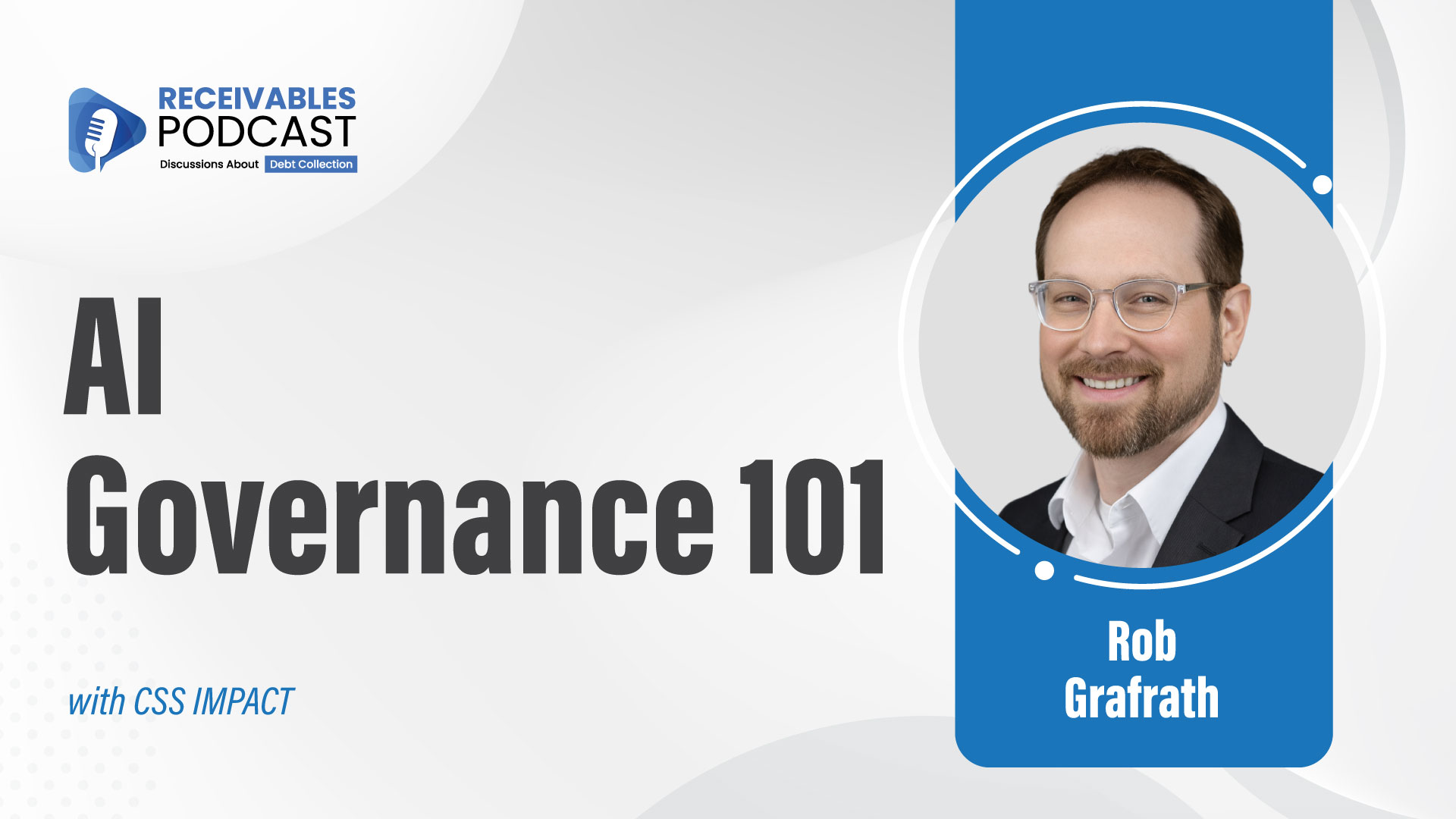
Hello everybody, Adam Parks here with another episode of Receivables Podcast. Today I’m here with a frequent guest, Mr. Rob Grafrath, joining me today to talk about a personal passion project, which I think is kind of exciting. So I’m not going to steal the thunder on this one and prep the whole thing. Rob, we’ve done a couple of episodes together. I’ve got your background on camera. I’ll drop a link below. I want to give you this time to talk about the AR collective and all the other great things. Could you tell everyone in the audience a little about your project and what it is that you’re building?
Rob Grafrath (00:43)
Yes, sir. Usually it starts with how you got into the seat that you’re in. So I think maybe because you’ve already hit me on a few of these, I’ll do the ten-second overview. I was a collector in 99, went over to IT, did IT for most of my career managing developers and all that, and then did technical consulting for the last couple of years, then branched into this crazy idea I had. So you could say it might have started when I started technical consulting. And if there had been software, if there had been an open-source debt collection system, I absolutely would have sunk my teeth into that thing, learned it top to bottom, and became an expert on that system.
And then anyone running that system now, they would have Rob Grafrath Consulting ready to go to implement, install, configure, migrate, whatever. But there was no such thing. And so I’d say it probably came early this year, maybe an epiphany moment of some sort, where I was just, I was like, reading about open source systems and companies. I take like one class a semester of college continuing education. You could say it’s for fun. I don’t know. But there was this one segment of the book talking about open AR. It’s like a hobby. I don’t know. College for fun.
Adam Parks (01:59)
I love that. Call whatever you want, man. I love that. Always learning.
Rob Grafrath (02:04)
Always be learning. That’s and be humble, right? Going into these classes. Like, you can do this for thirty years, but still there’s so much that you can learn. So, I felt like I knew all about open source software and systems, but this talked about how they are governed and structured and, like, what are the business models around that?
And it just got my wheels spinning, and I was thinking, gosh, I’ve always dreamed of anyone that starts as a developer working with some of the legacy systems out there, you take one look at this blue screen, and you say to yourself, I could write that. Give me a break. That thing’s a joke. This looks like it came straight outta 1980, ’cause sometimes it did.
And then you start thinking, I’m gonna make my own collection system. And then you actually start working in those systems and seeing, it might not look that glamorous on the cover from the front screen, the collect screen, but in reality there’s a whole lot of very sophisticated, very deep logic. These things are truly complicated systems. And if you have the proper level of humility that any good developer should have, you realize that that is not a one-man thing; you should not try to build your own system, right?
Adam Parks (03:14)
It is a multi-million-dollar mistake that I have seen many of my friends make through the years.
Rob Grafrath (03:19)
Yeah. And some of the big collection agencies, they’ll say the same thing, and they’re like, Well, we’ve got developers; let’s do it. Let’s just make our own. Some of them do. The joke I like to make is that homegrown has an emphasis on grown because that’s the sound you make when you try to use those systems. Not a lot of them end up liking them.
Adam Parks (03:42)
Look, I’ve seen a lot of organizations spend two million building a system internally, bringing in development resources, doing all of the things, and then converting back to one of the pre-made systems that’s customized. I could think of five instances off the top of my head.
Rob Grafrath (03:59)
Yeah, right. So, this is early this year. I’m vibe coding. I’m like, I can make things so fast. But I still was like, but I don’t know everything that is known about this industry. I don’t. I’m not the operations guy; I’m not the dialer guy. Like, I know what I know. So I was like, if we really wanted to take this seriously, what do we gotta do? Well, you’d need a whole community of people working together on something like that.
And then I said, Well, why not? Right? I did some research. Has anyone ever tried this? See, has there ever been a nonprofit in the receivables space? couldn’t find any indication of anyone attempting an open-source collection platform, or there’s practically no bespoke open-source software for our industry. So that’s where the idea for the Open Accounts Receivable Collective Foundation was born.
Adam Parks (04:49)
And so from a software perspective, it sounds like this organization is more than just the software itself. This is not just the compiling of code into a pile and saying, “Here, everybody can go use this code.” You’re envisioning a much grander collaboration and cooperation across organizations, which I think is already happening. We can observe a lot of that walking around any conference and seeing all of these competitors standing in a group talking about the latest challenge or ruling or whatever, or how they’re addressing a new challenge. And you’ve got a lot of that cooperation that’s happening today; the big question becomes: how can we coordinate those efforts amongst the group in a more organized way?
Rob Grafrath (05:37)
Yeah. How do we focus those energies? We do see it all the time. Heck, you’re on your podcast. Folks love hopping on and sharing what they know and sharing with their peers. I think as a community that maybe we get villainized and all this, like these guys trying to collect debts; they’re the bad guys. But in reality, we’re all brothers in the foxhole. We like to collaborate on things, I feel like. But yes, you’re right.
Adam Parks (06:05)
We keep interest rates low, and we keep credit available.
Rob Grafrath (06:08)
Right. We serve a very vital part of this economy. So yeah, it started from software, and then I started thinking like, okay, let’s see how we would get people together to still build it. And then the idea really moved beyond software. Because as I started sharing it, people would say, like, shoot, I would love to just have, like, working sessions where people could bounce ideas around, having kind of a sandbox that’s just a neutral space.
And we have some great trade organizations which do a lot of that, right? We have great communicators in the space, like yourself, that are helping to bring people together and educate and so on. But I feel like the kind of working group style I don’t know, incubator, maybe is a term some people have used for ideas that, if we could actually get a lot of interest, and start having some regular events where people actually try to dig down and get work done, more than just kind of the lecture format. I’m thinking hands-on, true work. Yeah, true workshops.
Adam Parks (07:12)
Workshop style, like here’s how we’re actively engaging with this. But that makes a lot more sense, I think, if you’re talking about commonality in systematic operations between companies. Because if we’re using the same system of record and we’re facing the same challenges, or we’re building the same modules, or we’re making those modules available to others, because this module calculates interest that way, that module calculates it if you’ve got this different scenario, and you start being able to build those. And I’ll use just something that I deal with day to day. I’ll build some skills in order to make that repeatable and portable.
Rob Grafrath (07:49)
Right. Sharing those AI skills. I want to hit on that AI topic because, again, a lot of it started with me having fun vibe coding and thinking, “This is so great.” And what I’ve found as I’ve gotten deeper and deeper into using AI-assisted coding is that AI and open source are like they’re made for each other because think about it.
What does AI want? It wants context, right? What does it need? It needs the words, right? And if you’re on a system and it’s compiled, it’s hosted, it’s SAAS, you can’t ask Claude or ChatGPT, “How does the system handle XYZ?” It can’t see the code. You have no access, right? Running an open-source system, you could ask that question, and off it goes into code land. And you don’t have to be a developer to ask a deep technical question about what code is doing, if all of the code is laid bare before the AI. I’ve been following this, and we really are at a bit of an open source renaissance right now, because of the two big factors I feel.
One of them is like what I mentioned: AI loves open source because it can just read what the code does, figure it out, and then answer questions or figure out how to integrate with it. The other thing is that contributors, the barrier to entry and to contributing to open source projects is lower now. Now some say that there’s a problem with this because here comes the AI slop, they call it, right? They’re like, Well, here are people that don’t know anything about what they’re doing, and they’re trying to vibe code something, and they try to do a pull request into this repository.
Adam Parks (09:24)
Now they’re leaving bare APIs and data exposed.
Rob Grafrath (09:28)
Yeah. And it’s like low-quality, high-volume commits or pull requests, and then the people trying to manage this repository are flooded with all of these low-quality, high-volume, and they’re like, oh, this is a problem. I feel like the problem is getting better over time, first of all, as the AI assistants are getting better at coding, and as we, as folks trying to run an open source repository, also start fighting fire with fire and using our own AI to help do some triage. A lot of folks that run a public project, they’ll take a pull request as more of a feature request and not like, hey, use my code, but like, here’s something I made and I think it should be part of the product. And then the people running the project say, okay, good idea, but we’re gonna do it our way, right? We’re gonna we’re gonna write the code for that.
Adam Parks (10:19)
That’s back to the portability, though. You can build some really great tools using artificial intelligence, but if you can’t make it repeatable and you can’t make it portable, you don’t really you haven’t really created something. You’ve solved a problem. You have not created something. The challenge that I’ve been facing today.
Prior to recording today, I may or may not have been spending some time in skill development. But you and I talked about this, and I think it was at CRS a couple of months back, and we were just kind of sitting there talking about this general idea and where you were trying to go with it. One of the things that kind of struck me was the governance piece of it. And I think it’s because I’ve been working on a similar type for the good type of project on my side. And it was really interesting to get your perspectives on it. And what I’m talking about is the governance of the organization over the code. As we started talking about this, it wasn’t about letting me build just the best set of code. It was about letting me build something that can outlive me.
Let me build something that has governance beyond it being the Rob Grafrath show, and let me get these other folks involved. Let me try and bring the best minds together so that there’s some sort of governance to this project that is not an individual but becomes the collective property of this group. That I think is an interesting approach. What brought you to that type of governance first model?
Rob Grafrath (11:49)
Yeah, it’s just like you said, it cannot be the Rob Grafrath show. If I tried to do this by myself, it’s a failed endeavor, and to do something, I figure if you’re gonna do something, do it right? And looking at the pattern of, like, who are the superstars of open source projects. And you have Python with the Python Foundation, which is a 501(c)(3) nonprofit in charge of protecting that canonical codebase. You have Apache with the Apache Foundation. Again, foundation is a repeating pattern. Linux open source, you have Linux Foundation.
Adam Parks (12:26)
Mozilla. Yeah.
Rob Grafrath (12:27)
Yeah, Mozilla. So it’s like, okay, so that’s how you do it. You start a 501(c)(3). Yeah, so the model mimic, right?
Adam Parks (12:32)
So you saw the model, and you said, Let me follow this model that clearly works.
Rob Grafrath (12:38)
I’m not trying to reinvent this pattern. This is a well-trodden path that I am following. And so I said, well, first of all, the name has to have foundation in it, apparently, because that’s what you do, right? And researching, I founded it in Delaware because this is gonna be nationwide. Where do you do that? You do it in Delaware. And it has to have certain words; when you have a nonprofit corporation in Delaware, there’s a certain set of words; like, one of them has to be part of the company name, and foundation was on the list. I said Perfect. So that’s where the Open Accounts Receivable Collective Foundation comes in. It’s a mouthful. We’re gonna call ourselves the OpenAR collective, colloquially, and you could call that our trade name.
But I said, let’s start the foundation, and now what do we gotta have? The bylaws, the policies. I want all of these to be super airtight. So ran it by some friends at RMAI and friends at ACA and got their feedback. And then, as I’ve been talking to people in the halls of these trade shows and on one-off calls, I started to see who’s the most excited and who I feel would help to flesh this out and be that check and balance. Because when you’re building a board, you want to have people whose skills and expertise complement your own and not just yes-men and people that don’t really go figure.
Adam Parks (13:59)
You don’t want to fill your board with sycophants. I’m shocked, especially not in a foundation or a collective. No, you want people who are also going to roll up their sleeves and participate.
Rob Grafrath (14:10)
That’s right. So had lots of great potential candidates. And ended up landing on Heath Morgan, Mark Cavan, Donna Weaver, and Lucas Brown. Lucas is bringing the tech talent. Donna is also doing a nonprofit of her own; lots of entrepreneurial talent there. Of course we all know our friend Heath, the author, attorney, technologist, right? And Mark Cavan, previously of the CFPB. So, like we have regulatory people here, we’ve got attorneys. Feels like it was a great mix on our initial board. So it’s a board of five currently. We’re looking to grow that to nine, most likely by the end of the year. And I wanted to kind of deliberately let’s seat a good-sized board, and then for the rest of the year let’s announce our presence, and this is kind of why I’m here today. I want to make sure everyone knows we exist and we want your participation. And that the people who are showing the most interest and who are also great complements to the existing folks on the board, those will be candidates for the remaining four seats. For example, we don’t have any agency owners on the board. We kind of want one, right? And you can say, well, that’s a shortcoming. Why didn’t you do that? Well, I had some great candidates.
Adam Parks (15:17)
But you’ve left room for it, and you’re in the process of building it, and now we’re discussing it. I mean, I think that makes a lot of sense. I’m impressed that you didn’t just try to fill the seats because I think that’s what a lot of organizations do. They’re like, we’re gonna have nine seats; who are the nine people? Like, ready, set, go, but building yourself a strong foundation and then bringing it into the marketplace and seeing who actively wants to participate, because it’s hard for you to anticipate somebody’s engagement level.
Right. When you’re out soliciting, but when people start soliciting you, you can start really seeing that engagement level or that desire for engagement, and how they’re going to work on the project itself. Having served on a few boards and as president of many, it’s interesting to see how different groups have gone through kind of that division of power, recruiting those right people, getting everybody to the table for the discussion.
But if you’ve got folks that want to participate, I’m gonna ask this as a two-part question. But if I’m a technical person and I want to get involved, what does that look like? And if I’m a non-technical person who wants to get involved, what does that look like? If I’m just an agency owner, business owner who wants to participate or be supportive, but maybe not in a position to start coding.
Rob Grafrath (16:36)
And thankfully it’s kind of the same answer for both. The way to start is to go to openarcollective.org and read the materials I’ve got up there. There’s a little button up there called Join. You hit that fella, and there are two ways to participate as part of our community. One is as an individual. So on the left side you’ve got click to join as a member of the open ar collective. Now, to be clear, this is not membership in the kind of traditional 501(c)(6) trade organization style where there are membership dues, and like again with 501(c) (6) as a trade organization you’re doing politicking and your duty is to your members, yeah, lobbying.
Adam Parks (17:18)
Lobbying and other activities. Yeah.
Rob Grafrath (17:21)
These are things that are out of my interest. There are people doing that well. So, as an individual member, you sign up, and that gets you on my mailing list. And then also get access to our members-only Discord server, which is starting to gain some traction. And this is the place where real-time conversations can happen when we start doing events. A lot of those will end up being on the Discord server. And now the road splits, right? So the technical person says, okay, I’m a member; now what? Again, we’re just getting this started. So we haven’t had things like let’s have a technical steering committee, or let’s have our first technical jam session where we go through some of the designs that we might have. But those will come very soon, right?
So it looks like in the next coming weeks or a month or so, we’ll start holding some of those technical hands-on sessions. Let’s get into some engineering topics and get deep sessions, and then for the non-technical person, that looks like the technical guys asking hey we’re technical guys; we need some operations guidance. How should we design this thing? How should we build this thing? What are your needs right now? What are the pain points, so we can start working towards what you want out of this thing and not just what Rob Grafrath thinks would be a cool idea, right? The second way to participate from the join link is if you are an owner of a company or if you’re in a role where you can sign for things on behalf of that company, you can sign the mission supporter statement. All that says is you know you read the mission of the Open AR Collective, what we stand for.
And you say that sounds good, right? This is you giving us a thumbs up and signing a statement that puts your name publicly on the Open AR Collective webpage on the list of mission supporters. No obligation, no fees, nothing like this, right? It’s literally just you giving us your thumbs up and your star gold star of approval.
Adam Parks (19:15)
I mean, it sounds like it’s an easy way for folks to get engaged and involved. I’m interested to see how you start organizing everybody as you come together on those coding discussions, and how do you filter all that information together and get people involved? Because I’ve built a lot of software in my life, and I’ve never built one that reported to a group. I’ve never built a successful one that reported to a group. And I think that’s where the challenges start to come into play. How do you envision kind of organizing that and keeping things moving? Is that through leveraging kind of that board structure and diversifying that a little bit, or do you have any plans for how you take all of these different great ideas and consolidate and prioritize them into an actionable project?
Rob Grafrath (19:59)
Yeah. I think to start with it, it’ll start as the board. It’ll most likely be on the technical side. Lucas and I will be trying to do, you could say, project management and organization, gathering the ideas, holding the sessions, and then kind of being those, ’cause someone has to be the gatekeeper. You can’t just have everyone contributing and then here comes a flood of code and we’re like approved, approved like this. That’s chaos, right? Democracy is great, right? Of course. And we all want to have a great democratic system. But then there’s also this sort of hierarchy that needs to be there.
Adam Parks (20:34)
Even democratic systems have to have, like, a republic democracy, right? There still has to be some management of the process.
Rob Grafrath (20:39)
Yeah, like the Republican democracy. Exactly. so starting it the we’re this is this is probably a me and Lucas problem on the technical side. And then in time here. So again, because we just started, we’re filing; there’s a form called the 1023 that gets you 501(c)(3) status. I’m not actively fundraising yet. We’re not asking for sponsors.
If a sponsor should stumble upon my doorstep and drop a bag of money, then we’d be happy to deposit it into the Open AR Collective’s bank account. But you want to have 501(c)(3) status. There’s also a bunch of things you’ve got to do in all the different states to make sure that, if you’re gonna be fundraising and if we put a sponsor button, right, that we’ve met the requirements statewide for all 50. So you could say maybe by the end of the year, most likely, timeline-wise.
We will start bringing in some sponsorship money. It’s honestly currently funded through private donations. A lot of my own money, frankly, is going into the collective. And what we’re spending on right now is getting the word out. It’s sponsoring things and going to trade shows and whatnot. But once that funding starts happening, then you can say, well, let’s shift into second gear.
We’ll be able to start hiring staff or consultants whose jobs will be to take over what hopefully becomes a big snowballing pile of great ideas and pull requests and code for us to start integrating into our platform. And then these people will have full-time or part-time jobs where it’s their responsibility to review the code and do the testing.
To stand up test environments and sandbox environments so that we can actually start running this software with trial accounts and so on, and getting us to a more mature organization that runs things a little bit more in a more organized fashion than me and Lucas would be able to do just with the two of us, right?
Adam Parks (22:34)
You’re looking for perspectives across the spectrum here, right? Like you need collectors looking at interface screens, you need collection managers looking at their piece, you need operations and dialer managers looking at their pieces, and compliance teams. So you’re really looking for a broad spectrum of individual and company participation in order to really drive all of those individual perspectives and be able to build something incredible by actually bringing together all of these different ideas into some sort of a melting pot, which is not easy, but the more that you do it in ideas before it’s code, the easier that process becomes when it starts turning into code.
Rob Grafrath (23:14)
Yeah. Get the crowd to start getting interested, and we’d absolutely need non-technical people. Maybe more so than technical people, with vibe coding being what it is today. The non-technical people could probably just tell their Claude, here’s my idea that I want it to do, and then here it comes as a combination of both their suggestion and some code that we’re like, well, if it’s well written, then maybe that does become part of the codebase.
Frankly, I like to keep my expectations appropriate, right, appropriately low. A lot of it really depends on that community happening, right? Depends on people saying yes. I like to call it this is my little joke, little reverse field of dreams sort of situation where if they come, we will build it. Right. If we can get the people to show up, then I do truly believe magical things will happen.
Adam Parks (24:09)
I don’t disagree with that at all. I think you’re on to something here. And in our final minutes here, Rob, give me the pitch. You got our audience here, listening, ready to participate. What is the pitch to our audience to drive their engagement in this organization?
Rob Grafrath (24:25)
Gosh, I’m not a great elevator pitch guy, frankly. I take ten thousand words to say something I could have said in five. That you’re already in- I feel like if you’re listening to this podcast, you’re already the sort of person who wants to be engaged and that it takes interest in your industry, in your career. Now, whether you’re even interested in the software that we’re talking about building- this open-source collection platform- we call that the flagship program- that is not the only thing that we will create. And that is not the full intention of the OpenAR collective. We want you to join, to start participating, collaborating, and communicating with your peers. And I truly believe that a lot of unexpected opportunities will emerge when we start getting together in these collaborative sessions.
And having this neutral foundation that can host whatever we come up with and not worry about well this is hosted for-profit company and what if they they do a carpet pull on us it goes away to be able to a great example here in the last couple weeks we were preparing for this conference and a bunch of the folks that are gonna be doing hands-on sessions we’re in an email chain together and we said we really need like a set of of sample accounts just like a kind of a dummy organization of accounts and payments and notes and clients and users and like what what should we use there? And I said, well, I mean, okay, so great. So I spent a couple of days writing an account generator- something that you can run, Python scripts that randomly create as many test accounts as you want, and put it up on the Open AR Collective GitHub repo for anyone that wants something like that.
And I even baked in things like Propensity to pay that actually kind of follows real Propensity patterns, like based on balance size and age and so on, stuff like that. Then if you wanted to start doing decision science training, like learning how to write decision science models, you’d have something that has those propensities already built in. And I didn’t expect that that would be an output of the Open AR Collective, if you’d asked me a few months ago. And yet it is, and here it is, right? Just because it’s like
see a need, fill a need, right? We’ll see something that we want to have exist, and then we’ll make it exist, and then we’ll make it free, and we’ll make it public. Sorry, that wasn’t very elevator pitchy, was it?
Adam Parks (26:43)
So to me it sounds well, but let me try and shorten that for you. It sounds to me like this is that place where people can come together from a technical perspective. We’ve got trade associations that we come to from a regulatory and a lobbying perspective, and that has become the place where we do those things. But I don’t know that we’ve ever really found that technical common ground where we would come together and have those same types of discussions from a technical perspective that generally we’re having from a lobbyist and regulatory perspective.
So it sounds to me like what you’re trying to build is that community and environment for those engagements and interactions to happen and for us to be able to learn from each other because so many of us are like, I wish I had that account generator a couple of weeks ago because I did live AI prompting sessions at the RMAI executive summit for the entire conference. We did like two hours of this and had to create the same thing. So that collaboration and coordination across even those simple little things that aren’t necessarily a business end product, but are part of our combined and common learning experience as we continue to push into new and interesting pieces of technology.
Rob Grafrath (27:53)
Absolutely. It feels like it’s the perfect example. If it’s like a bite-sized thing that’s just like everyone’s gonna want something like this, so let’s just have it. Let’s just have a common version. And if people don’t like the way that I made it, okay, Fork it, adjust it, right?
Adam Parks (28:08)
Fork it, adjust it, right. Like Brian, you want to do it differently, or you want to provide us with some feedback that would be beneficial to everybody? And the first time I really saw this in action, Rob, was with ComplyArm. So we built the compliance management platform. We rolled it out into the marketplace. It’s a SaaS environment; it’s all single-tenant and all of the things, right? And every time somebody would come to me and say, I really need this feature. I would say you have two options. You can either pay me X amount of dollars per hour, and I’ll build you that feature. This feature is going to cost X, or I’ll make it available for free if I can make it available to everybody on the platform. Nobody ever paid me for the custom code. They all said, Yeah, make that available. Everybody’s going to need that licensing tool. Like, roll that out for everybody. Everybody’s going to need that. And I really did see that collaboration and coordination of ideas as long as they don’t have the technical lift.
That comes with it, to take it to the next level. So when you’ve got a group that can take good ideas and turn them into actionable items, I think that’s a really incredible place for the debt collection industry to come together and drive more of those discussions.
Rob Grafrath (29:10)
Yeah, right on, right on. And I’ll be anyone that’s paying attention to anything in the collections industry; I’m gonna try to have our name plastered all over everything. So hopefully I don’t I can’t imagine anyone not listening to your podcast, but if there were such people that existed in this industry, they’ll be able to see us at trade shows. We’ll be publishing in some of the major news outlets for the industry, making sure that everyone knows that we exist, so there’s no excuse not to know.
At least, hey, this is something that I could become a part of, and really, what’s the risk, right? You hit join, and now you’re on the mailing list, and later on you decide that you’re not that interested, whatever, right? Walk away. But I feel like the people that are serious about this, as this is their career, this is their passion, I think will catch their attention.
Adam Parks (29:54)
Well, thank you for putting another tool in our toolbox.
Rob Grafrath (29:58)
Yeah, that’s what I like to think of it as. It’s just another great resource out there for everybody.
Adam Parks (30:04)
Well, we’ve been talking about this for a couple of years now. I’m very excited to see it come to reality. Rob, very proud of all of the work that you’re doing to coordinate all of these folks, all of that time, energy, effort, and your own dollars going into this to do something to better the industry. And we all really do appreciate you.
Rob Grafrath (30:20)
Thank you, Adam. And thank you for your contributions as well. Like we’ve been talking about this for a little while. And he’s told me I’ve come to him with some probably pretty stupid ideas. He’s like, Well, Rob, maybe let’s align this idea this way. It’s like, yeah, you’re right.
Adam Parks (30:36)
But every one of those ideas has found its way into your final product. So it hasn’t been a function of things that you can’t do. It was a function of talking them through with other professionals in the space and then organizing and executing on those ideas, which I think is really the foundational mission of what you’re trying to accomplish. That may not be verbatim your mission statement, but I think that’s really your underlying objective as a person.
Rob Grafrath (30:56)
Yeah. It speaks to the heart of the mission. Absolutely.
Adam Parks (31:02)
Well, Rob, I really do appreciate you coming on, sharing your insights today. This turned into a really great discussion as usual. I’m a big supporter of this. I believe this is a great place for technical folks and non-technical folks to come together and start talking through some of the technology challenges that we’re facing- a place where we can openly talk about AI and not listen to the same lectures over and over again. But actually get our hands dirty and start to execute on some tools.
Find those aha moments and share our common experience. Relationships are built through a shared experience, and this is yet another opportunity for us to share an experience together while we learn, grow, and do something for our industry.
Rob Grafrath (31:43)
Love it. Absolutely.
Adam Parks (31:45)
For those of you who are watching, if you have additional questions you’d like to ask Rob or me, you can leave those in the comments on LinkedIn and YouTube. We’ll be responding to those. Or if you have additional topics you’d like to see us discuss, you can leave those in the comments below as well. And I can guarantee I’ll get Rob back here at least one more time to help me continue to create great content for a great industry. But until next time, Rob, I really appreciate you.
Rob Grafrath (32:05)
Yep. Thank you, Adam. Appreciate you as well.
Adam Parks (32:06)
And thank you, everybody, for watching. We’ll see you all again soon. Bye everyone.