Adam Parks (00:07)
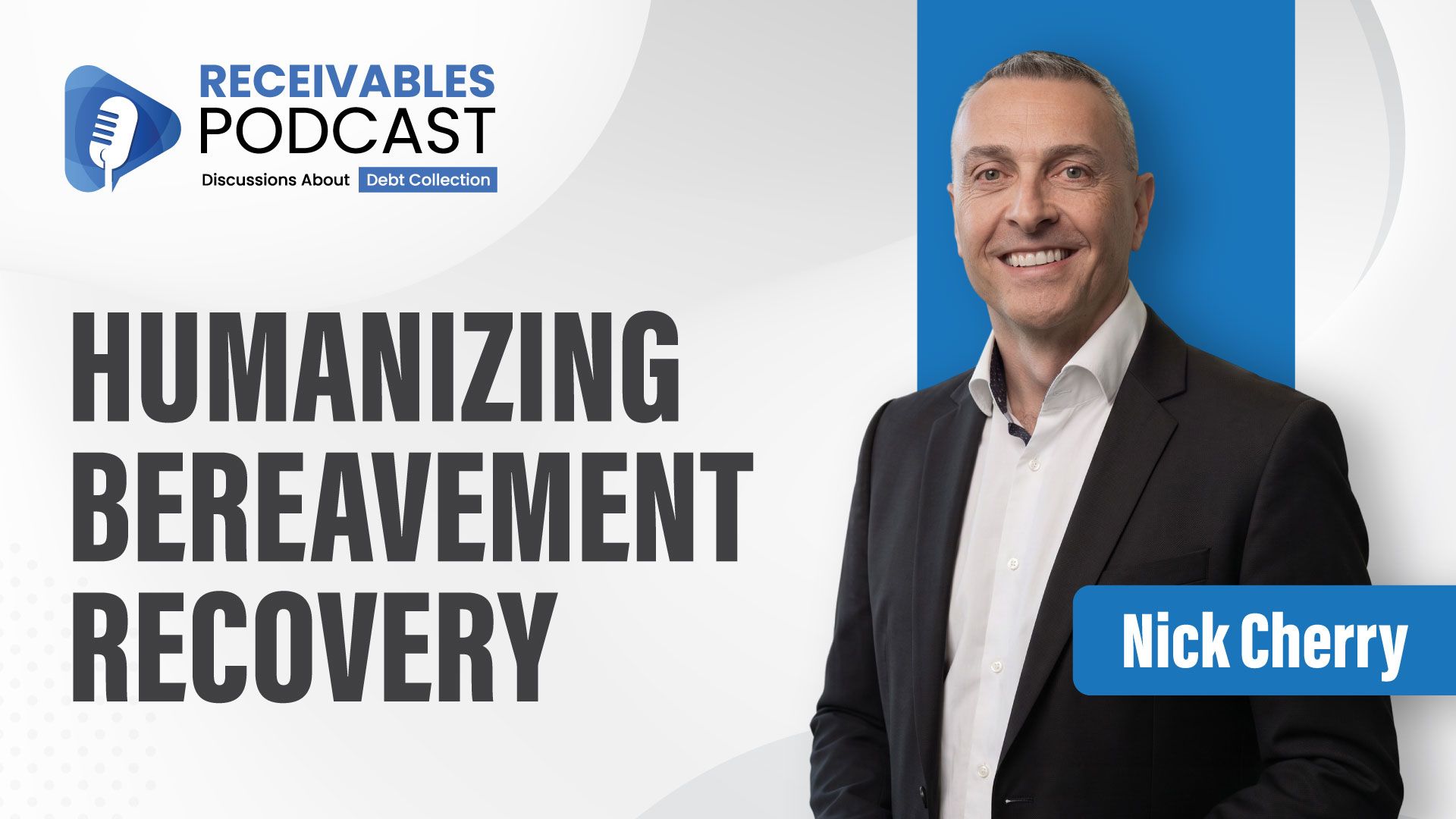
Hello, everybody, Adam Parks here with another episode of Receivables Podcast. Coming today with an international episode, I’ve got Nick Cherry joining me from Phillips & Cohen Associates on a global scale. Very excited for this conversation because PCA is one of those organizations that has perfected a niche and not an easy niche, and then expanded that niche on a global basis across all types of jurisdictions. So very excited for today’s conversation. Nick, thank you so much for coming on, joining me from the UK and sharing your insights.
Nick Cherry (00:42)
Great to see you, Adam. It’s been a while, so I know it’s good to be here. Very much very much looking forward to it. So anyone who knows me knows I can talk.
Adam Parks (00:49)
Well, Nick, I’ve had the opportunity to get to know you through the years and do some work together. But for anyone who has not been as lucky as me, could you tell everyone a little about yourself and how you got to the seat that you’re in today?
Nick Cherry (00:59)
Yeah, gladly. Look, I’m fifty-one now, so I’m just celebrating my thirtieth year in the industry. So I always think I’m very much a child of the industry. I started on the phone when I was young and foolish and didn’t know any better. been with PCA for sixteen years, having done a number of roles with on the creditor and then the and the and the agency side prior to this. but really you know struck a chord when I joined PCA as a truly unique, value oriented business.
and just a great group, entrepreneur led and you know, people you can really work and have some fun with. and that’s you know it’s been great for my role as it has grown with the business, from running the UK to running the international arm to then probably for the last decade or so running the global operations and it’s been a great ride.
Adam Parks (01:42)
And with that comes so many different challenges operating on a global scale. But for anyone who’s not familiar with Phillips & Cohen Associates, what is your focal point and what really makes you different as an organization?
Nick Cherry (01:54)
Look, it’s a great question. We have probably two or three different niches, but we’re best known as really the market leader in deceased account care or estate resolution services. So, you know, I think there’s some terrific businesses that do similar things, particularly domestically in the US. but Adam and Matt, Phillips and Cohen as they are, made that leap of faith internationally. So really do very, very heavily specialize in that unique and deeply personal situation of what do you do when you’ve got a deceased consumer and how do you make the very best of that from a customer experience perspective? But also if there is an estate that can discharge the liabilities, make sure that we make sure our clients get paid. So we really have spent 29 years now as an organization really trying to perfect that niche.
Adam Parks (02:41)
And the perfection of that niche, I think, comes down to the consumer experience. And I’m gonna kind of drop a personal story from a time ago just to illustrate this. But in working with Phillips and Cohen and in their online presence many years ago, we built a site called Continued Path. And the objective of the site was to provide the consumer with some resources to help them. Someone in your family passes away. What tools do you need?
It wasn’t a collection tool. It was a customer assistance tool to help people organize and collect the information necessary to go through these processes. And I want to say it was within three months of having built this site and worked on these resources and spending all this time. I had lost a family member, found my laptop open at their home, working my way through the checklist, which tells me that the tool set.
That is being created. And the focal point is not just about collections. It’s about resolving accounts. It’s about bringing things to a conclusion so that the families can move on, the creditors can move on, and facilitating that uncomfortable discussion, which I think is fueled by a lack of understanding of what comes next when somebody passes away. And I don’t think that families are always financially prepared for the next step.
What was it or what was that catalyst that helped your organization see that the customer experience was going to be that mission critical value add that could differentiate you on a global scale?
Nick Cherry (04:12)
I think there’s probably a couple of things that it’s a really good question. Thank you for sharing the Continued Path. Look, I’m proud to say we still use that today. We still reference that on a lot of calls in a lot of markets. And
Adam Parks (04:21)
Sure.
Nick Cherry (04:22)
and a lot of our clients now reference that in some of their bereavement notification calls. So that one’s been a really great development that stood the test of time. So thank you for your help back in the day. Look, I think I think it stems also just from who we are as a group, right?
Nick Cherry (04:37)
You know, we’re a privately owned organization. Adam (Adam Cohen) and Matt (Matt Phillips) live and breathe the business, along with our company president Howard Enders. And that’s just who they are, right? They are also a bunch of if you ask anyone who works, you know, amongst the nearly eight hundred of us now, they’re three, you know, very caring guys from the greater Philadelphia area. And that, you know, they will always find a way to go out of the way to help people. And I think it stemmed originally from just listening to our clients, right?
What pain points were our clients suffering in the receivables management industry? What were they struggling with? What did they need help with? And let’s go build a process to solve that for them. And I think we, you know, we’ve carried on trying to solve problems. You know, I think look, I think if you rewind the clock in the US as well, back to when the FTC was starting to look at this area.
I think, you know, Adam and Matt and PCA and other colleagues in the deceased care environment. Led that conversation with the FTC that’s now the guidance that we look on as best practice. You know, and I think we’ve always taken the view that every death, and we’ll all go through this at some stage and lose a relative and someone close to us, it’s such a deeply personal event that the last thing you need to do is make it any worse. So let’s make it as positive and as least distressing a scenario as it can possibly be and give people the help, the space, the respect.
the compassion and empathy that they need at the time when we all need it most. You know, I think I think it’s really really a good point because I think Adam, our chief exec, group chief exec, says it really well, right? Nobody really goes to school to, you know, to learn how to manage the probate process. Unless you want to be a lawyer and an attorney, that’s n that’s really not what anybody inspires you to do, right? And even those that do,
Adam Parks (06:11)
Sure. Even at that, I don’t even think they’re seeing that in law school.
Nick Cherry (06:16)
right, that’s not the part of law that most are interested in. So I, you know, I think we’ve always taken a view that
Let’s be transparent with consumers. Let’s help them make educated decisions. Let’s be really clear on what’s their liability and what’s not. and we, you know, we go to a lot of lengths to make every interaction we’re making very clear. Adam, this is not your bill to pay, right? This is only the estate of the late, you know, Joe Bloggs. and we never want consumers to make erroneous decisions. So we go to an awful lot of lengths to make ourselves as easy to engage with as possible and then as transparent and as empathetic as we can possibly be.
Adam Parks (06:50)
Well, even beyond Continued Path, you’ve developed an entire suite of products and services to enable both the families and the creditors to smooth out that friction. And not wanting the or not trying to put it on the wrong consumer, I think, is a mission critical piece of that. But there’s also all of the pieces and parts that come together.
With inheritances and all of these other pieces and parts. Talk to me a little about the suite of products that you’ve built around this very small niche. You found a lot of different opportunities in a very small space. And I’m curious how that was an evolution? Was that hey, we’re going to attack these five things? Like, how did that
process work for you to focus on such a small space and create so many different solutions?
Nick Cherry (07:34)
It’s part of the vision that we always had, right? You know, I think that the ideas have been in gestation for around 20 years. You know, I’ve had a small part to play in helping gestate those ideas, but I think it’s really been born out of just really having that focus on bereavement and the customer journey and really taking some time to understand what are the pain points, what are the pain points that we all go through.
And how can we help from a holistic perspective? How can we help smooth those pain points out? You know, so we we’ve gone in and developed our NotifyNOW product as a great example, which is there, you know, there are still so many organizations where you either have to walk into a branch or you still have to pick up the phone and notify that that creditor or that organization that your loved one has passed away. Why? You know, we live our life on a mobile phone now. Why shouldn’t you be able to do all of these things online?
And not just do it for one organization, but do it for them all. So we’ve developed NotifyNOW with, you know, in certain markets, like 2,000 companies in the background that at the touch of a button you can just notify through to. So it really is trying to solve those customer pain points. You know, and those things were those things were visions that the guys always had, but then their own personal experiences led them there as well.
You know, and and and when they’ve lost a loved one actually having to go through it themselves and actually, you know, those were crystallizing moments that said, you know what, that’s enough. You know, let’s go fix this, right? We’re uniquely placed as a business to, you know, to build the technology, to do something about it. Let’s go fix it. You know, it was the same with some of the other technologies. So we have LegacyNow, which is estate planning, right?
You know, I’ll share a personal story. You know, my dad is eighty-eight. I’m you know, I hope he has many years still to go, but he summoned myself and my two brothers and we went through the box. you know, piece of paper by piece of paper. And you know, again, there has to be a better way to do this nowadays. And of course there is. So we’ve spent a lot of time and effort building a product that is that digital vault that keeps everything safe and secure and locked down in this crazy cyber world that we live in now.
but is also the key when that unfortunate day comes, is the key to quick notification and having a handle on what exists. So really, really important stuff.
Adam Parks (09:43)
I mean, that’s the reduction of friction, right? You’re reducing the friction for that family through that process to be able to go through the notifications and to be able to ultimately pass that documentation between generations when necessary with the appropriate keys and mechanisms. I think that’s an important part. Getting people to or activating folks to go and do this prior to being summoned by the parent.
I think it is a different challenge altogether. Have you found a catalyst that gets people moving down that path and preparing their families appropriately?
Nick Cherry (10:18)
It’s a difficult conversation for people to have, right? And you know, I think that there is still a stigma around it, you know, which is unfortunate. You know, I think we were not a B2C organization in terms of our sales approach with that. We are taking much more B2B to C. So really, you know, really looking to go to financial advisors, wealth management companies, also some of our biggest creditors for, you know, for premium banking options where they could also offer this as an add-on for people.
I think it’s also trying to normalize the conversation. You know, we’ve recently just we’re very proud of this, sponsored a podcast. you know, not yours unfortunately, but but but you know, a podcast that’s really called, you know, called Keep It Grief, which is just really, you know, one radio DJ from the UK and and and a very close friend of his who both suffered, you know, pretty horrific loss in their own time and just sat in a bar talking as friends, trying to normalize the conversation.
Because there shouldn’t be a stigma around it. You know, we should be talking about it, we should be planning. It’s a scandal that in most of the countries where we operate, about a third of people make a will. That’s it.
You know, and yet we take no notice of that and therefore there’s no roadmap for what happens after the event. You know, so everything we could do to try to educate and drive that debate I think is really, really important.
Adam Parks (11:39)
Well, part of the reason I I asked that question, Nick, selfishly is is for our audience because there’s so many business owners that watch our podcast that probably also may not have all of the appropriate documentation in place, may not have the tools, and should probably be thinking about that because we’ve done some episodes lately where we’ve talked about moving organizations between generations and you know, that type of succession planning.
And I think this is that opportunity to look at it from a personal perspective as well as the way that we plan for our businesses. We need to think about the people around us as well. So just something to kind of throw out there.
Nick Cherry (12:17)
Especially with the modern family. you know, and I and my family’s the same, you know, very you know, very very few of our parents stay together forty and fifty years like like used to happen back in the day. So the modern family is a lot more complex and it’s so much more important to leave those roadmaps for the next generation as to what you want to happen. otherwise they don’t get a say. So really, really important.
Adam Parks (12:37)
Clarity is key, right? And as you’ve grown as an organization across all that you’ve expanded into all of these different geographic areas, how similar is the legal process around the globe for resolving these types of accounts?
Nick Cherry (12:52)
That’s a great question. Look, it’s no coincidence that the markets where we’re dominant, and really, you know, that’s obviously the US US is our home market, and proud to be there. Canada, the UK and Australia. So those are our core markets in New Zealand that we service from Melbourne as well. Those largely follow, and I excuse me saying this is a Brit former British common law, and that thread of inheritance law.
So the inheritance law is broadly similar. There’s nuance. The US is a lot more court driven and legalistic. Some of our international markets are a lot more amiable.
And you know and and a letter will be enough to file your claim rather than an actual court hearing. So there are big differences. But I think the regulatory environment is very different. Very you know, very different, less litigious and more much more driven towards one central federal regulator.
Almost CFPB style but still here and still with teeth and and you know and and less of the of this of the state level legislation that’s drive that’s driving the US I think the
Adam Parks (13:52)
Interesting.
Nick Cherry (13:53)
The biggest difference internationally has really been on just a principles based regulator. so really both Australia and the UK have very strong principles based so even if the rules are not clear
They expect you to interpret them in such a way that you’re not causing customer detriment. And there’s a lot of focus on vulnerability and making sure that you really do the right thing to drive good outcomes as a business. Ignorance is no excuse. And it’s less focused on the letter of the law and more on the interpretation and the spirit of it as well.
Adam Parks (14:27)
the intent of the regulators. That’s always fun to try and predict. so
Nick Cherry (14:32)
And of course they don’t give you any guidance on what that means until you get it wrong.
Adam Parks (14:35)
Correct. Yeah. I mean, I’m familiar with the C FPB and their enforcement mechanisms. You know, when we start thinking about this type of a process, we’re having these really difficult conversations with these consumers and we have to develop a level of trust with them and we have to do it across the globe. And who is trusted more than an international company, right? By the general consumer, which means that you’ve got your work.
Cut out for you to develop that level of trust with those individual consumers. What kind of steps have you been taking? What kind of tools have you found allow you to kind of build that online or that digital trust prior to an engagement with a consumer? What, you know, how are you able to get them to trust you enough to come and try these tools, to come and check these options?
Nick Cherry (15:22)
I’d love to say we’ve discovered what the silver bullet is, but we haven’t, right? So we’re humble enough to accept that and we’re still learning today. You know, I think we’ve never been afraid of using technology, right? We know it’s a deeply human moment and a deeply personal moment, but we’re also massive believers that technology can help us achieve those things and support our people.
So, you know, the AI and pay and payment portals and self-service are the vogue for the last few years. We were there 15 years ago with our online estate resolution platform, trying to build trust out there in the market. Things like Continued Path so that we could show, look, yes, there’s a debt-related conversation that we need to have here, but actually there’s a way that we’re going to treat people.
And there’s commitments and who we are as an organization that we’re that we’re committed to. So there’s a lot of different things. The most recent thing, and I think the thing we’re most proud of, Adam, is we we’ve I was the barrier to this, right? I’ve always resisted any type of customer survey in the bereavement space. I always took a view that, you know what, these people are dealing with something bigger in their life, let them let them move on, let them get closure and let them move on. And we bought a business three years ago in the UK.
which is a more mainstream technology debt collection business called Ardent (Ardent Credit Services), and it’s been a tremendous addition. And they had a very well tried and tested CSAT survey process in there, which was so light touch that it that it that it convinced me to give it a go. And I’ve got to say it’s been the best thing we’ve ever done.
so it’s literally one touch of a button for people to engage. So there’s no 10 minute customer satisfaction surveys.
Nick Cherry (16:51)
and we’re getting response rates in excess of thirty percent, which I’m told is incredible. And we’re getting, you know, CSAT scores for our different offices between ninety-two and ninety-eight percent.
Adam Parks (17:02)
Wow.
Nick Cherry (17:03)
You know, and it really is tremendous validation. We then took the step of launching things like Trustpilot, right? So again, everyone’s now living their life online. So let’s find an independent validation. Don’t believe us, we’re a bunch of debt collectors and we’re proud to be so. Don’t take our word for it, go and get independent validation. And I think you know, some of the trust pilots, and we’ve really just low launched this globally now. So we’ve been piloting it in a couple of markets, but we’re seeing response, you know, scores of 4.8 stars for our Manchester office, four point four for our Liverpool site in the UK, out of five and those are just stunningly good scores. And the and the the best thing is
Adam Parks (17:40)
Yeah. For considering the friction that they’re dealing with on a day to day basis, it’s not looks, it’s not even like you’re just calling and trying to collect a debt, right? You’re not calling and trying to get them to pay on their credit card. Like you’re having a very difficult conversation for them to come out the other side feeling like there was that level of positivity. And honestly, I’m surprised it’s even that high. And that must be on a pretty high volume of ratings because one, 5.0 is almost impossible, like a I mean it’s very difficult for a debt collector to get there without really specific effort.
Nick Cherry (18:07)
Well, I think if you get fired people think you’ll you’re doing you’ll do it artificially, right? So which we never would. So no, we’re very fine.
Adam Parks (18:11)
Correct. Correct. Well, look, you’re never gonna make everybody happy. That’s just not the reality of the situation. And some people are gonna leave negative reviews because they’re experiencing something negative right now. It has nothing to do with the customer service or level of engagement that they’re getting from your team, but they’re going through something right now. Yeah. I’m sure there’s value there too.
Nick Cherry (18:26)
And even those are useful moments though, Adam, right? So, you know, I the one star reviews all yeah, the one star reviews all come to me and they go to our leaders in each office and we use them as improvement opportunities, right? Let you know, let’s pull them piece to pieces, let’s see if there’s substance to it and what can we learn, how can we get better? the best moments, I’ve got to say my favorite moments, bar non, are when they take the trouble to name one of our agents.
Adam Parks (18:51)
Yeah.
Nick Cherry (18:51)
and we can and we can track it back and we can actually say give them a pat on the back, give them a huge shout out, share it with whichever client that relates to, and just catch people doing things right. Because it’s a hard job. Frontline collections
Adam Parks (19:03)
It is.
Nick Cherry (19:04)
Now, whether it’s bereavement, whether it’s traditional collections, that’s the hardest job in our industry now, bar non, because we expect a lot of them. So just to be able to catch people doing things right is just as good as it gets.
Adam Parks (19:16)
And what do you think the next five years looks like? So you guys have kind of perfected what you’re doing, you’ve gone through geographic growth. What does the future look like for your global organization?
Nick Cherry (19:25)
That’s a great question. Look, like everybody else, we’re constantly trying to find efficiencies and take costs out. Yeah.
Adam Parks (19:32)
Fair.
Nick Cherry (19:33)
I always seem to miss the call from clients saying we want to increase your commission rate, right? So, you know, whereas obviously wait, you know, wages and cost of living are going up.
Adam Parks (19:38)
Must have been on vacation.
Nick Cherry (19:41)
So you know, we’re on that constant drive to, you know, to make sure that we’re not going to sacrifice anything that underpins our business, but we have to find efficiencies.
Nick Cherry (19:50)
so I think we’re already looking at a lot of different technologies. We’ve been using AI for five years now as an organization. And we started off using it to make our people better. So, how do we cement their knowledge? Continuous learning platforms and speed to competency platforms that really just help make our frontline agents better. You know, the next phase, and we’re in this phase right now, is implementing, you know, notes automation and
You know, QA semi-automation and those sorts of things are a big step to take out. But I think that process is coming, isn’t it? I’ve heard you talk many times on this podcast about RPA and just that you need to take every manual touch point out of your process. And
Nick Cherry (20:31)
I think my view is probably slightly different, and I know this is the PCA view as well, is you know, I still think people want the choice to speak to a human being. And I’ve always talked about, you know, giving people a choice. I have no doubt in the future we will deploy voice bots to complement our talent.
But we always want to give people an off-ramp, right? If they consume a let’s be transparent that someone’s engaging with a bot and let’s give them an instant off ramp, as long as it’s in working hours, an instant off ramp that gets them to a human for the support they need as quick as possible. And I think that we’re we’re we’re looking at a lot of technologies, but we’re human in the loop as the paramount out.
I think and I think that that’s an important part of the industry for the future for me.
Adam Parks (21:13)
There’s a study that came out from the National Bureau of Economic Research on a Chinese sample talking about exactly that and how the voice AI bot alone was underperforming the live agents, but the magic was in the traffic controller, right? To the workflow automation tool that’s looking at machine learning and then determining which group belongs in which channel. Because even reading through the results that they had on I forget the sample size of accounts,
But as we kind of read through it, it became clear that there was a bifurcation and it wasn’t what I expected. There were younger folks who needed a live person to talk to. Older folks needed a, you know, we’re great with the AI reminder. And so I I don’t think until we’ve really put some of these things out there, but it seemed like the number one performing piece was the co-pilot. It was the
Creating your super agent, getting them onto the phone faster, training them continuously, feeding them information on the phone so that they can optimize their working habits. And I think even note-taking, for example, is not necessarily just a cost savings. That’s creating structured data for future reporting and tool sets. So now that we’re starting to deploy all this artificial intelligence.
We start thinking about how to track store and organize that information for future use because I think we’re all starting to learn quite quickly that if we don’t have the data organized in a way that we can feed it to the model, then the model can’t understand it, can’t interpret it, and we’re not gonna get the same value from these AI driven tools that we would have if our data was organized.
Nick Cherry (22:46)
And also being proportionate in that data as well, right? You know, nobody wants to build a data mountain unless that data’s gonna be useful. So you’re right, organizing it in a way that becomes reportable and it’s going into the data lake in the right way and it’s informing the next decision. I think if you take the crystal ball, I think the future looks like hyper personalization, right? And I think that’s you know, that’s where we’ll end up with a lot more decisioning happening, you know, at by with the AI.
Now the biggest challenge, I think there is going to be getting clients and regulators comfortable that that’s okay to do. You know, I think I can only imagine going to some of our clients globally and saying, hey, we wanna let the AI loose. We’ve got eleven hundred email and SMS templates, and we’re gonna let the AI loose on what that path looks like. And that would be a very short conversation with a lot of guests.
Adam Parks (23:32)
Well, you guys have an interesting challenge to face when it comes to the usage of artificial intelligence because of your data privacy, we’ve got data privacy issues in the United States and you have the same one state to state and the requirements that we have. But then when you start crossing international borders, you’re in, you know, in the UK, there’s all kinds of requirements there. That’s gotta create a new layer of complexity to building and deploying these tools. I know this wasn’t part of our kind of overall topic for today, but I’m curious how you’re addressing it.
Those types of data security challenges cross borders when we start looking at how the spider web of requirements is continuing to form around us.
Nick Cherry (24:13)
That’s a great question. I mean, and look at the reality is you’re a global business until you’re not, or until your clients tell you that you’re not. you
Adam Parks (24:18)
Yeah. Yeah.
Nick Cherry (24:20)
I think look, one thing we won’t compromise on, and it’s why for a pretty small organization we hired a CISO a year or so ago who’s been an amazing addition to our businesses. We just we’re not prepared to compromise on cybersecurity. But nobody has any guarantee of safety in this world, right? We’ve seen incredibly respected businesses disappear through no fault of their own.
Nick Cherry (24:42)
and that’s not something that gives anybody any pleasure. so, you know, I just think so first and foremost is to lock everything down and make sure that we do our, we do our, you know, our number one investment is to try to do that and keep the house safe and the doors locked. And then I think the reality is it’s sharing best practice. It’s building consistent data structures as you just said earlier on. We can’t really commingle those data sets.
Our clients wouldn’t let us, the regulators wouldn’t let us and we find we have contractual requirements in every market that and the US included, that US data’s gotta stay in the US and Canadian data’s gotta stay in Canada and so on and so forth. Now, being consistent in how we use it, how we analyze it, how we structure it, is the key to our growth and success. But, you know, we can’t really commingle it, which is a real shame. you know, we we
Adam Parks (25:31)
Well, I’m sure you can pull behavioral insights, right, in terms of people meeting these qualifications tend to take these next behaviors, or behavior A is gonna lead to behavior B and probably behavior C. But not being able to bring it together into one larger calculation must be frustrating, but also wildly necessary. I just hope we don’t end up as the United States in a situation where we’re dealing with something just as extreme within the confines of the United States because the states are just wild west with their regulations these days without fully understanding the disparate impact that will come from a consumer experience standpoint.
Nick Cherry (26:11)
Yeah, no, I agree. It looks like I know our suppliers would love us to be a truly global business. So that when we’re you know when we stand up a speech analytics platform, it can be just one solution instead of having to be five.
Nick Cherry (26:23)
But you know we’re not gonna win that conversation with all of our clients and regulators, so we just have to adapt and learn and go. And look, sometimes it also helps you because you know that some of the markets are more benign, some of them are international markets.
Are slightly more benign in the way they view use of some of this technology. So a great example is we’re using RCS messaging in the third-party collection space and have been for six months in our Liverpool office, whereas we know it’s a lot slower to come to market in the US. So it really also gives us a few different sandboxes to play in, which is a nice advantage sometimes.
Adam Parks (26:57)
That’s interesting. Do you see the communication channels being very different? I’ll give you an example. My wife is Brazilian and she texts voicemails back and forth with her friends. Like she’ll talk to her phone and text the voicemail. I, on the other hand, haven’t listened to a voicemail since like 1997. So are you seeing as you work across these different marketplaces that you’re seeing a different construct of consumer preference?
Nick Cherry (27:19)
Yeah, definitely it is. I mean, you know, look, Brazil is WhatsApp crazy as well, isn’t it? That’s that’s what it’s but
Adam Parks (27:22)
That’s crazy? I don’t even have a phone down there, just WhatsApp.
Nick Cherry (27:26)
yeah, it but yeah, you’re absolutely right. You know, and
Adam Parks (27:28)
Mm.
Nick Cherry (27:29)
There isn’t really a tolerance still for true permeation of things like WhatsApp and Facebook Messenger and those sorts of things in most of our markets, but there is definitely a difference in channel choice. We definitely see that. And it continues to evolve.
You know, I mean our RCS is gathering momentum with the more modern handsets and the capability that that has. You know, click to pay type of situations as well are really starting to permeate the industry. And as a debt collector I find that quite exciting. But yeah, there’s a there’s a there’s there’s there’s a lot of similarities between our markets, but there’s some huge differences as well, and that’s the exciting thing.
Adam Parks (28:05)
Well, that definitely keeps it interesting. And I feel like we’re gonna have to go down that rabbit hole a little bit deeper, Nick, on another conversation. I really do appreciate you coming on with me. I know our hours are off pretty significantly. So I appreciate you sticking around today, hanging out to have a chat with me. I’ve been looking forward to this for some time.
Nick Cherry (28:23)
No, likewise, really good to see you again, Adam Talk to you soon.
Adam Parks (28:26)
Absolutely. For those of you that are watching, if you have additional questions you’d like to ask Nick or myself, you can leave those in the comments on LinkedIn and YouTube and we’ll be responding to those. Or if you have additional topics you’d like to see us discuss in the UK, Australia, the United States, or any of the other amazing places in which Phillips & Cohen Associates is already operating, you can leave those in the comments below as well. And I’m hoping I can get Nick back at least one more time to help me continue to create great content for a great industry. But until next time, Nick, thank you so much. I appreciate all your insights.
Nick Cherry (28:54)
Thanks again, enjoyed it.
Adam Parks (28:55)
And thank you everybody for watching. We appreciate your time and attention. We’ll see you all again soon. Bye everybody.